OOTDLYYour style. Your vibe. Your world.

Fashion culture

What you’re wearing
has a story.

Every story, with its sources. Each new one is added here.

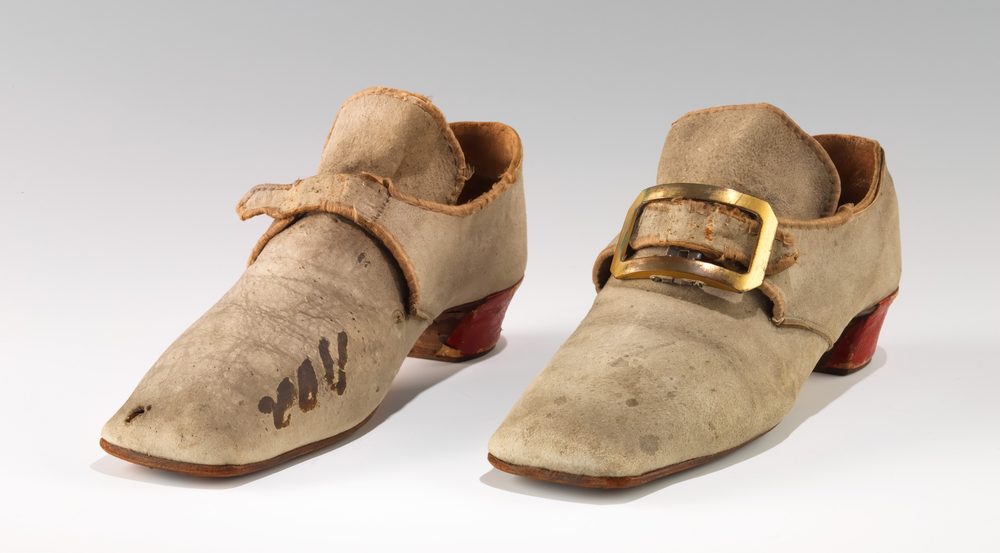
A pair of pale suede shoes with square toes, a gold buckle and red heels.
Photo: The Met, public domain.

The red heel

High heels were men’s shoes, and red told everyone who you were.

The heel wasn’t born to look pretty: it came from Persia, where it was riding footwear. The heel locks the foot in the stirrup and lets the rider stand up in the saddle to shoot.

Around 1600 it reaches Europe as a men’s thing: cavalry, strength, status. Women take it up soon after, in the 1620s, precisely because it was a masculine code.

Read the whole story

At the court of Louis XIV, the red heel became the mark of a noble presented to the king. The Académie française dictionary records “talon rouge” with that meaning: a noble of the court.

Here’s what almost every fashion video gets wrong: there is NO 1673 edict banning red heels for commoners. No one has ever found that document. It was court custom, not law.

The privilege that did exist, this one in writing from the king, was something else: the “justaucorps à brevet”, a blue coat lined in red for some sixty people allowed to accompany the king.

In Rigaud’s 1701 portrait, Louis XIV is 62 and wears square-toed shoes with red heels, soles and tongues, fastened with diamond buckles. The painting hangs in the Louvre and is 2.77 m tall.

And it was men who gave up the heel, around 1730 — half a century before the French Revolution, contrary to what is usually said.

In 1799 Napoleon summed it all up: “neither red cap nor red heels: I am national.” Ten years after the Revolution, the red heel still meant aristocrat.
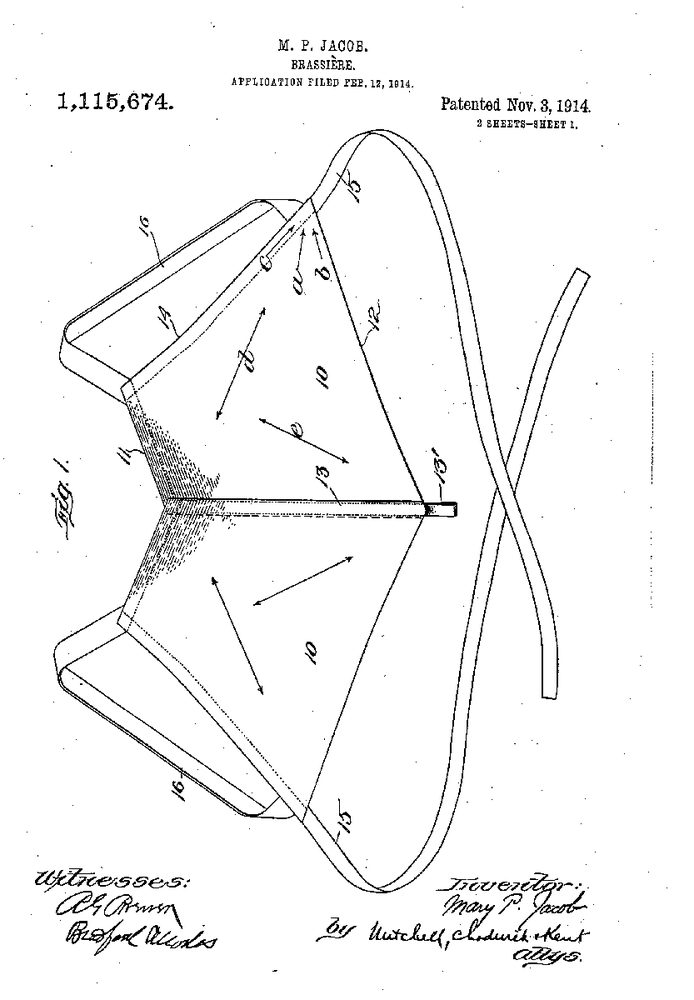
Drawing from Mary P. Jacob’s US patent 1,115,674, “Brassiere”, 1914.
US Patent 1,115,674, 1914. Public domain.

The bra

She didn’t invent the bra. What she did was something else, and it’s better.

February 12, 1914: Mary P. Jacob files for US patent 1,115,674. The printed title is a single word: “Brassiere”.

It isn’t the first garment of its kind — it’s the first US patent to carry that name. Earlier ones were filed as “breast supporter”, “bust supporter”, “corset cover”. There were at least six before it, one from 1893.

Read the whole story

And much earlier: in 2008 an excavation at Lengberg Castle, in Tyrol, turned up linen garments with cut cups. Carbon-dated to the 15th century.

The patent’s case isn’t aesthetic, it’s practical: a garment “backless, so it does not interfere with any style of evening gown”.

She sold the patent to Warner for $1,500. The factory made the model for one season and dropped it for lack of sales. Her own company didn’t take off either.

Then she changed her name and her life. As Caresse Crosby, she set up the Black Sun Press in Paris and published James Joyce in 1929 and D. H. Lawrence the same year.

Time magazine, in its 1970 obituary, called her the literary godmother of the Lost Generation.

The patent says “Mary P. Jacob”. She only took the name she became known by ten years later.

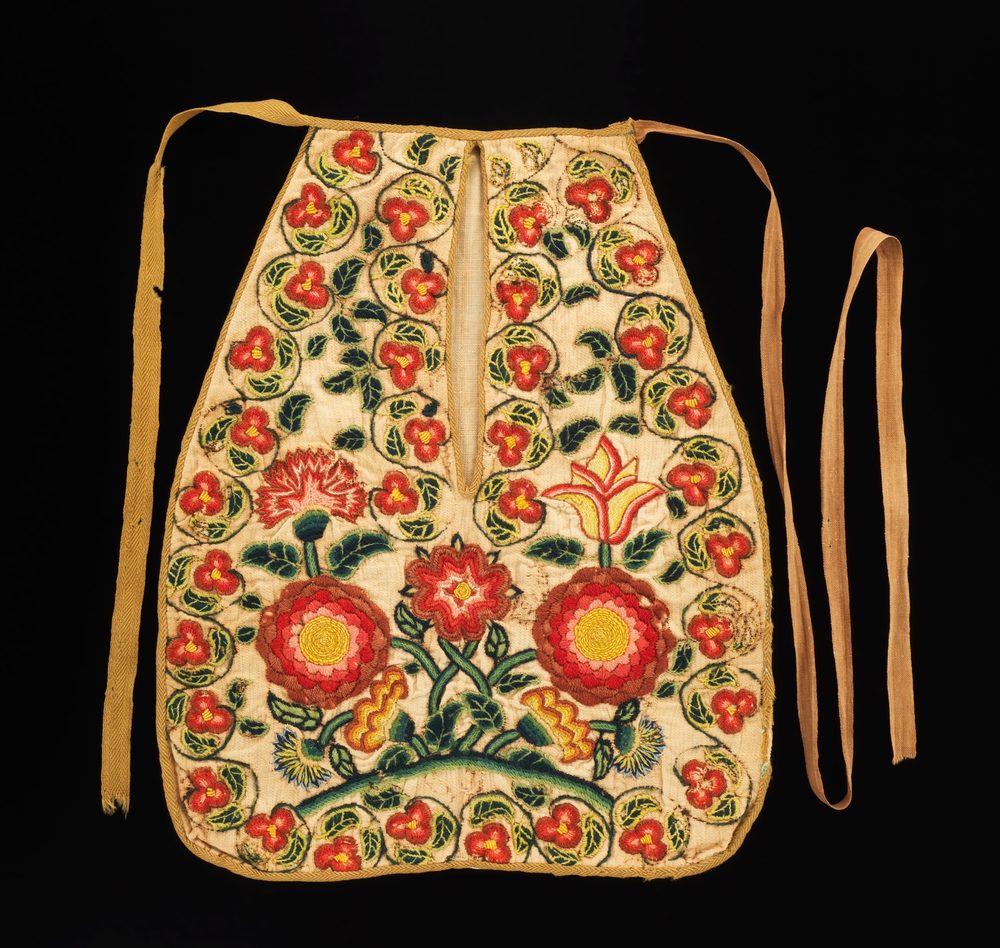
Embroidered tie-on pocket with floral motifs and its waist ties.
Embroidered tie-on pocket. Photo: The Met, public domain.

The pocket

For two centuries, a woman’s pocket was a bag tied around her waist, under her skirt.

It wasn’t sewn into the clothes. It was a separate piece, tied on with a string, reached through slits in the seams of the skirt and petticoat. You wore one, two or three at a time.

And they were big: most surviving ones measure about 40 by 30 cm. The largest on record is 61.5 by 43.5 cm — bigger than the biggest Birkin.

Read the whole story

Inside: keys, coins, jewelry, a watch, a thimble, a letter, a miniature portrait. Working women carried the tools of their trade.

That mattered. Under English law, a married woman couldn’t own property of her own until the property acts of the 1880s. The bag tied at her waist was the safe she had.

Two historians found 572 Old Bailey court cases for theft of these pockets.

Around 1800 dresses slimmed down, fabric got lighter and the bag no longer fit underneath. Enter the handbag: the “reticule”, from the Latin reticulum, little net.

But one didn’t replace the other — that story is too neat. The two lived side by side for almost a century; the tied pocket just changed its trade name, becoming the “money apron” or the “travelling pocket”.

What never came back was the sewn-in pocket. In 2018, 80 pairs of jeans from 20 brands were measured: an average depth of 14.3 cm in women’s against 23.1 in men’s.

Only 40% of women’s front pockets fit a phone from the three leading brands. And the average price is the same: $80 against $81.

Marc Jacobs, bearded, his curly hair tied back with a black bow, in a black jacket with satin lapels and a black V-neck jumper, against a white background.
Photo: Harald Krichel, CC BY-SA 4.0.

Marc Jacobs

He was fired for dressing the street, and five years later he was handed Louis Vuitton.

In 1992 Marc Jacobs brought grunge to the Perry Ellis runway. The collection was cancelled, never reached the shops, and he was fired.

3 November 1992: Nirvana and Pearl Jam as references at an American knitwear label. The executives didn’t forgive it. Today the collection is studied as a landmark of the nineties.

Read the whole story

What scared Perry Ellis was exactly what caught Bernard Arnault’s eye. In 1997 he became the first creative director in Louis Vuitton’s history. He was 33.

The house was 144 years old and had never sold clothes: only trunks and bags. Louis Vuitton’s first ready-to-wear dates from March 1998, and he built the division from scratch.

In 2001 he let Stephen Sprouse scrawl over the monogram in neon. In 2003 he did it again with Takashi Murakami: thirty-three colours.

He left in 2013, after sixteen years, with Vuitton at the top of the world’s most valuable luxury brands.

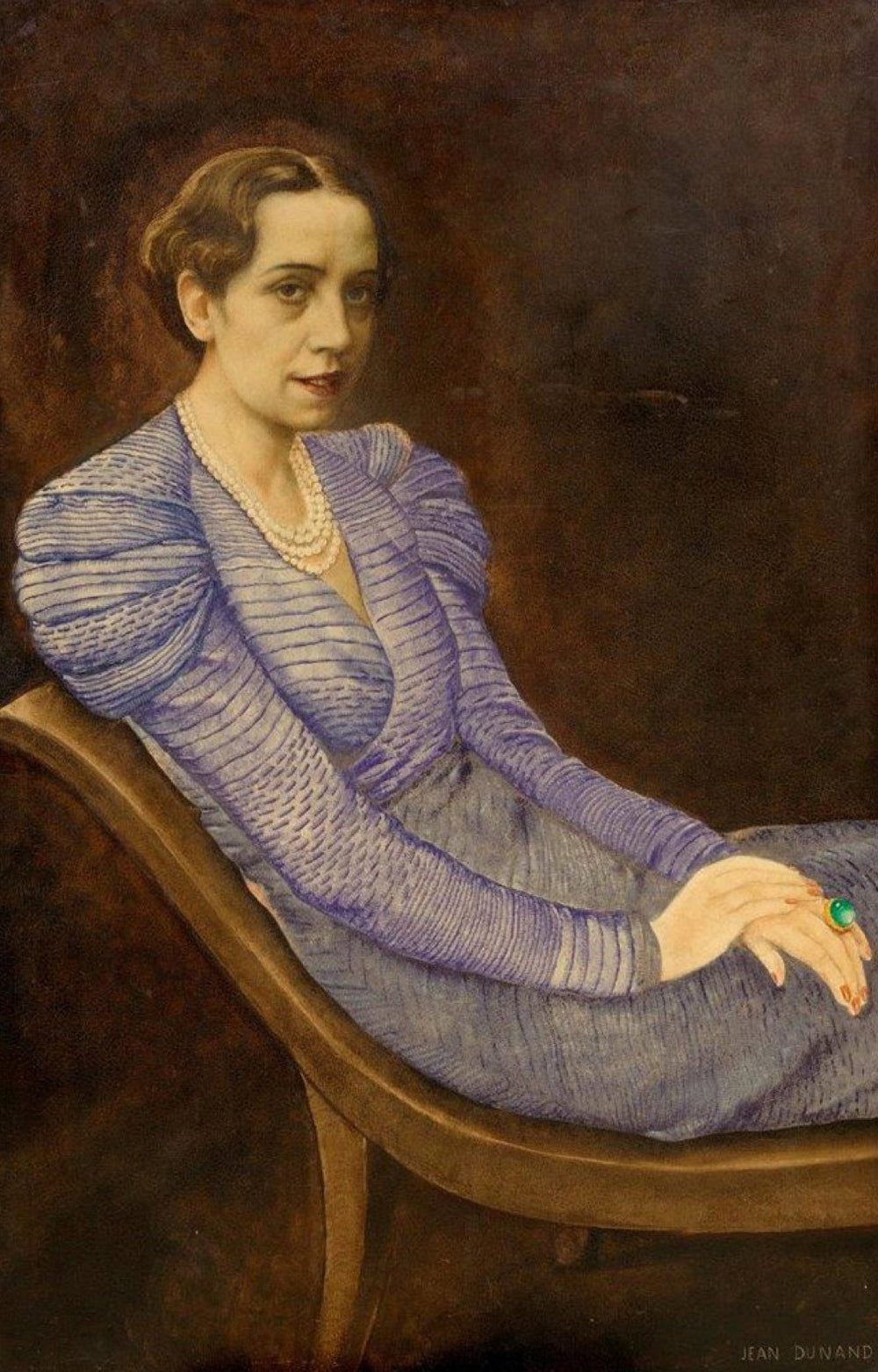
Painted portrait of a woman with short brown hair reclining on a wooden chaise, in a lavender dress with puffed sleeves, a multi-strand pearl necklace and a green ring, against a dark brown background.
Portrait of Elsa Schiaparelli by Jean Dunand. Musée des Arts Décoratifs, Paris. Public domain.

Elsa Schiaparelli

Coco Chanel refused to say her name. She called her “that Italian who makes clothes”.

Elsa Schiaparelli hit back with a single word: “that milliner”. The rivalry that split 1930s fashion.

Born in Rome in 1890, she arrived in Paris in 1922 with no money and no idea how to cut a pattern.

Read the whole story

In 1927 she knitted a black sweater with a white bow worked into the knit itself: a trompe-l’œil, not a sewn-on bow. Vogue published it. A New York store ordered forty. The house was born from that.

In 1931 Lili de Álvarez walked onto Wimbledon in one of her divided skirts, and the press treated it as a scandal. She was also one of the first to put a visible zip on a couture garment, when zips were for boots.

She brought Dalí, Cocteau and Man Ray into the clothes: the 1937 lobster dress that Wallis Simpson wore, the hat shaped like a shoe.

She saw Daisy Fellowes’s 17-carat pink diamond and took a colour from it. She called it Shocking and gave the perfume the same name, in 1937, in a torso-shaped bottle. The pink is still the house’s signature.

Two women, two opposite ideas of fashion: Chanel stood for elegance and comfort; Schiaparelli, for clothes as art and as provocation. The story goes that at a ball Chanel asked her to dance and steered her into a lit candelabra; the dress caught fire and was put out with soda water. The teller is Bettina Ballard, a Vogue editor.

She closed the house in 1954 and died in 1973 without seeing it reopen. Today Schiaparelli dresses the entire red carpet.

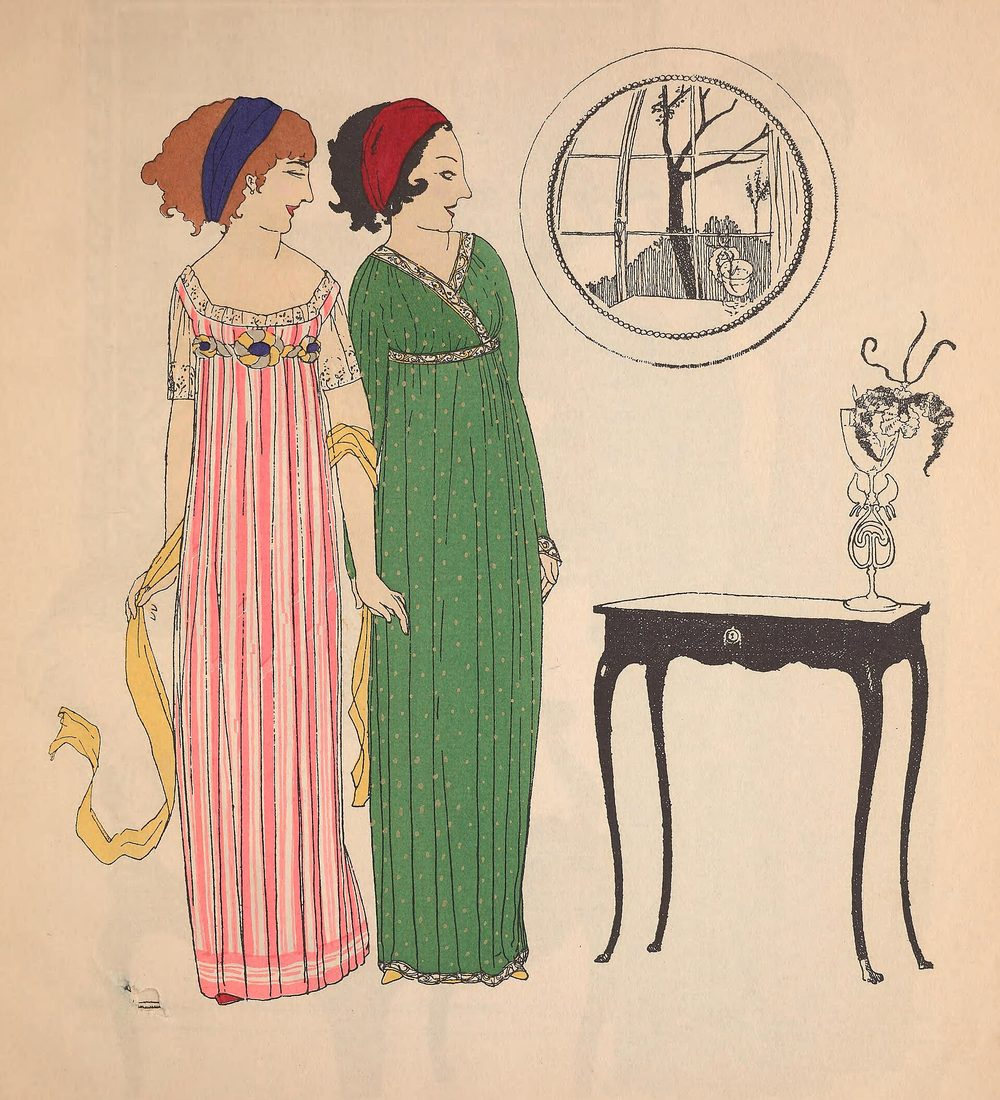
Illustrated plate: two women standing in long high-waisted dresses, one pink-striped with a yellow shawl and one green, beside a small table with a vase and a round frame showing trees on the wall.
Plate by Paul Iribe for “Les Robes de Paul Poiret”, 1908. Public domain.

Paul Poiret

He sold the idea that he had freed women from the corset, and then launched the skirt that made it impossible to walk.

Paul Poiret, Paris. On 24 June 1911 he threw the Thousand and Second Night party: 300 guests in costume at his home, and he came as a sultan.

In his memoirs, from 1930, he says his wife, Denise, waited for the guests inside a golden cage, surrounded by ladies singing Persian arias. The source for that scene is him. The museum that now holds his work doesn’t even mention it.

Read the whole story

The line everyone repeats is that he abolished the corset. In 1906 the promotional material for his own collection still shows the corset underneath, and other houses were already loosening the waist before him.

And the corset didn’t disappear: it was replaced by the bra and the girdle. One garment was swapped for two.

In 1911 he launches the “jupe à l’entrave”, the hobble skirt: so narrow at the bottom that it shortened your stride. The house that sold freedom put out the garment that most restricted walking all century.

He wrote it himself: “I freed the bust, but I shackled the legs.”

His couture house closed in 1929. He died in Paris on 30 April 1944, ruined and forgotten.

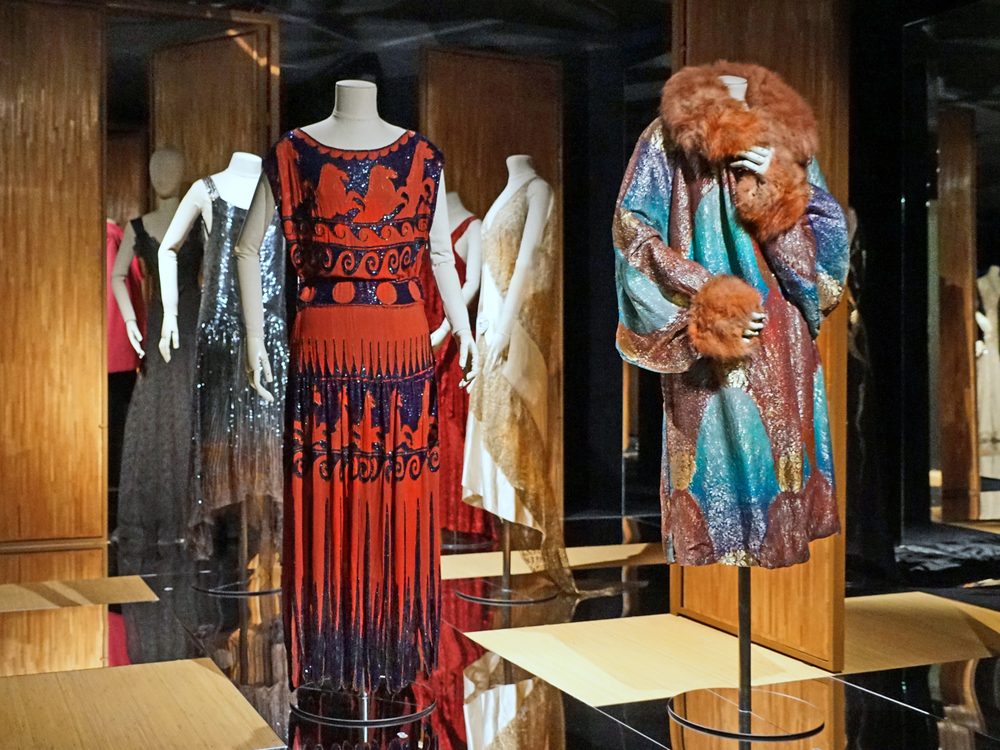
Garments on mannequins in an exhibition room with wooden panels: in the centre, a red dress embroidered with horses and waves in blue; on the right, an iridescent coat with a fur collar and cuffs; behind, a silver sequinned dress and a white one.
Photo: Jean-Pierre Dalbéra, CC BY 2.0.

Madeleine Vionnet

She didn’t invent the bias cut. She did something harder: she built the whole dress with it.

Cutting fabric on the diagonal already existed, but it was used for details: collars, ruffles, bias binding. Madeleine Vionnet was the first to rethink the entire garment from that technique.

Cut this way, the fabric stretches and springs back, follows the body and falls on its own. It needs no corset underneath to hold the shape: the shape is in the cut.

Read the whole story

And she didn’t sketch first. She draped straight onto an articulated wooden mannequin 80 cm tall, at reduced scale, and only then reproduced it at full size. She thought of clothes in three dimensions, like soft sculpture.

Her house, opened in 1912, offered paid holidays, maternity leave, a crèche, a doctor and a dentist on site. French law only made paid holidays compulsory in 1936.

Against copies, she set up a system: every model photographed from three sides and filed in registration albums, and her own fingerprint applied to the label sewn into every garment.

It didn’t work. A Paris museum holds an unauthorised copy of the “Little Horses” dress, from 1924. She spent her life in lawsuits.

And that story about her being inspired by watching Isadora Duncan dance barefoot? It has no source. What is documented is the opposite: in 1923 Isadora Duncan was her client.

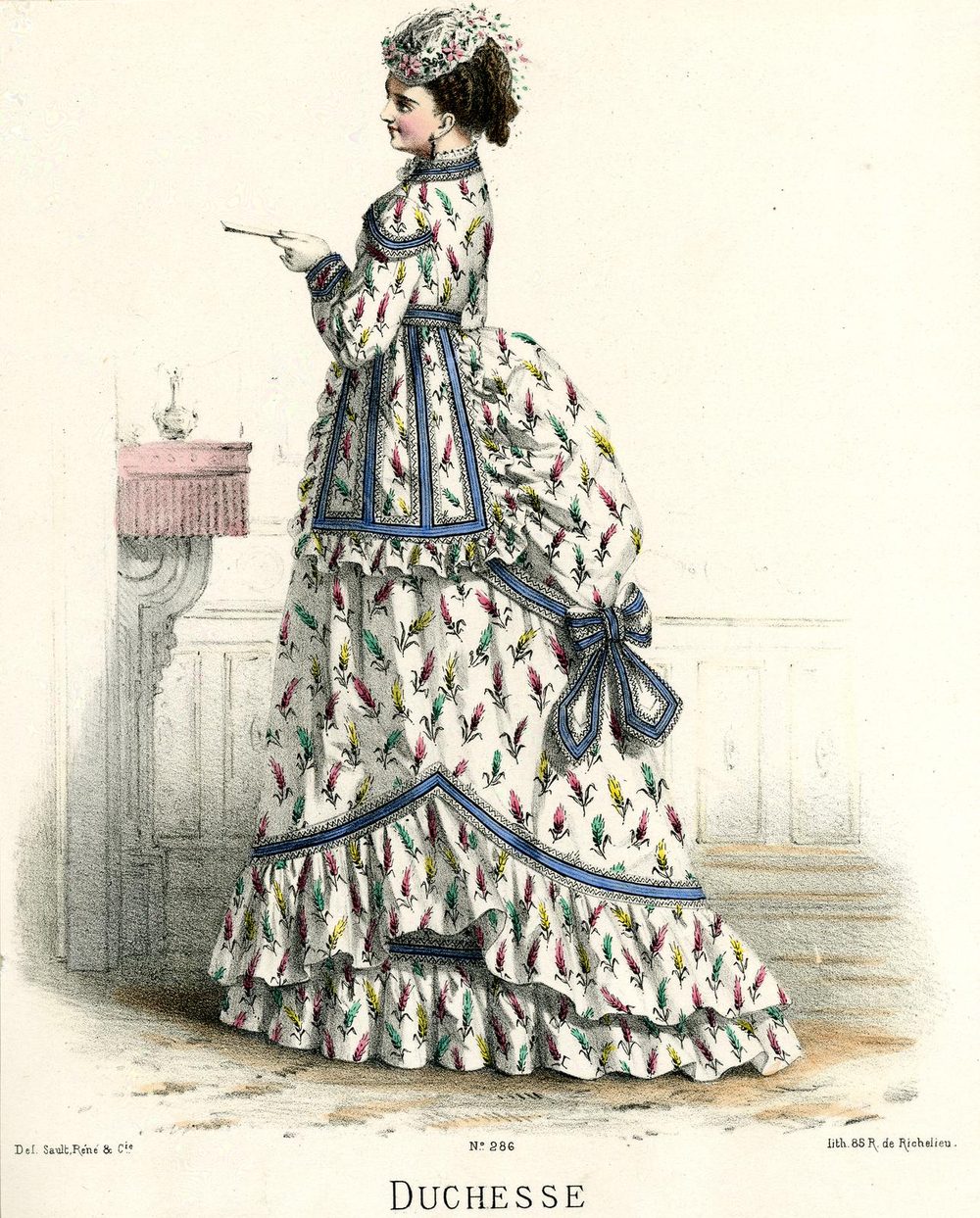
Hand-coloured fashion plate: a woman in profile in a white dress with colourful motifs and blue trim; a panel springs from the waist and falls over the skirt, with a bustle and a large bow at the back.
Plate “Duchesse”. Photo: British Museum, public domain.

The peplum

The peplum never cinched anything.

The flare that springs from the waist comes back every season. And the trick was never in the waist.

It comes from the Greek peplos: a length of cloth fastened at the shoulders, with so much left over that it had to be gathered up. That gathered fold is the whole invention.

Read the whole story

Magazines were already living off this. Where the waist falls and what the fabric does as it leaves it: that is what the Paris fashion plates were talking about two centuries ago.

And it had a name of its own. In the 19th century it was called a basque: the panel that springs from the waist and falls over the skirt. It’s what you’re looking at in this plate.

In 1947 Dior fooled the eye. The Bar jacket hid padding and horsehair at the hips underneath: the waist looked narrower because the hips were wider.

In the eighties it came back with shoulder pads, and that is where its reputation for excess comes from: the same piece that was a break with the past in 1947 sounded like too much forty years later.

Around 2011 it came back to the runways, and within two years it was everywhere, from the runway to the high-street shops. It’s the route followed by almost everything you end up buying without knowing where it came from.

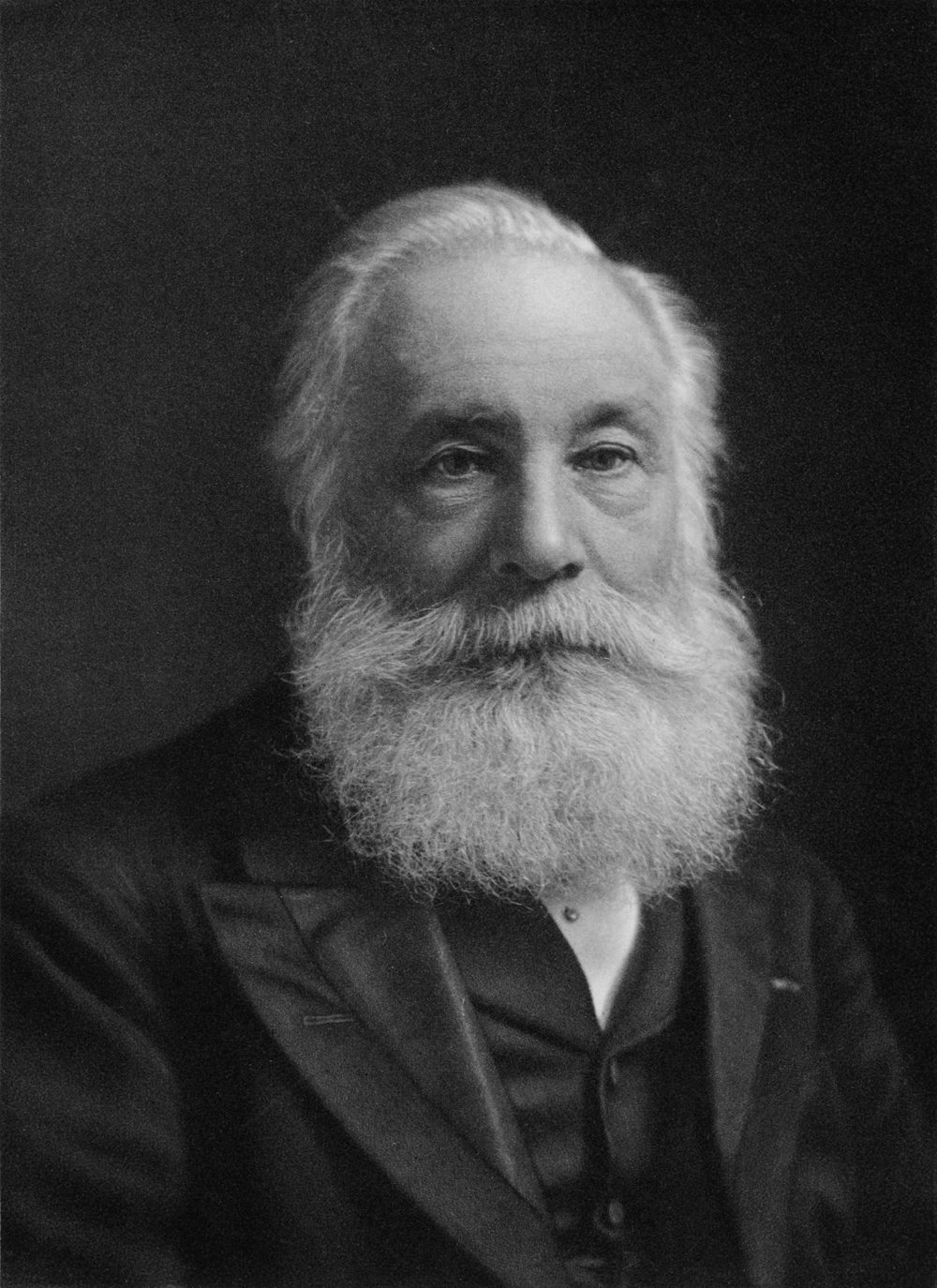
Black-and-white photographic portrait of William Perkin, with a moustache and a dark suit.
William Perkin. Photo: Elliott & Fry, public domain.

Mauve

The color of your clothes came from the waste of gas lighting.

Easter 1856. William Perkin had just turned 18 and was trying to synthesize quinine against malaria, in a makeshift laboratory in the attic of his parents’ house in London.

It went wrong. A black residue was left in the flask. When he washed it out with alcohol, an intense purple appeared that no plant and no mollusk could give. The raw material was coal tar: the leftovers of the gasworks that lit the city.

Read the whole story

He applied for the patent on August 26, 1856, aged 18, and set up a factory with his father and brother. By December 1857 he was already supplying the color to silk dyers.

And he sold it under a borrowed name: “Tyrian purple”, the color of emperors, which was extracted from mollusks and cost more than gold — ten thousand creatures for one gram. The name “mauve” came later, and from France, after the flower.

In August 1859 Punch magazine published “The Mauve Measles”. It described the fashion as an epidemic — it starts with the ribbons and ends up covering the whole person.

What followed: magenta, the aniline blues, synthetic alizarin in 1869. The whole industrial chemistry of color, and later the pharmaceutical industry, came out of it.

He was looking for a medicine and found a color. The color paid for the chemistry that ended up giving us the medicines.

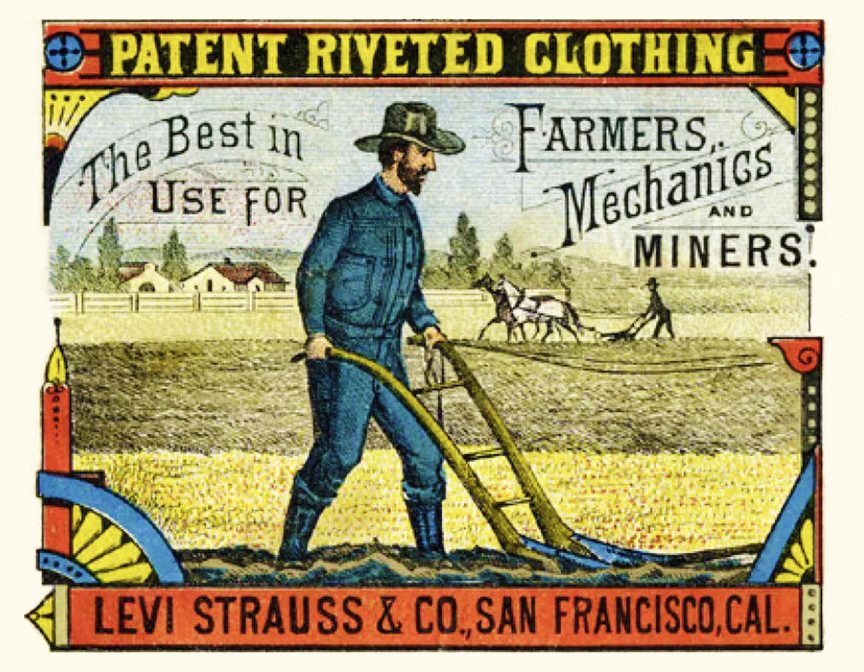
Color illustrated advertisement for Levi Strauss & Co., San Francisco: a man in a hat and blue denim work clothes plows a field; behind him, two horses pull another plow. Above, “Patent Riveted Clothing” and “The Best in Use for Farmers, Mechanics and Miners”.
Levi Strauss & Co. advertisement. Photo: Jim Griffin, CC0.

Jeans

The jeans you’re wearing exist because a tailor didn’t have 68 dollars.

December 1870, Reno. A woman asks Jacob Davis, a tailor, for a pair of trousers that can stand up to her husband, a woodcutter. He reinforces the pockets with copper rivets — the same ones he used on canvas and harnesses.

It becomes a craze among miners and railroad workers. Davis wants to patent it, but registration costs 68 dollars he doesn’t have. So he writes to his fabric supplier, one Levi Strauss, and offers to split it.

Read the whole story

August 9, 1872: they file the application. May 20, 1873: patent US 139,121, “Fastening Pocket-Openings”, is granted. Back then the garment wasn’t called jeans. It was called waist overalls.

In 1890 the patent expired. Anyone could rivet a pair of trousers. What remained was what we now call a brand: the arched stitching on the pocket (1873), the two horses (1886) and, later, the red tab (1936).

Labels weren’t born out of vanity. They were born because the patent ran out and the trousers had to be recognizable from a distance — even by those who couldn’t read.

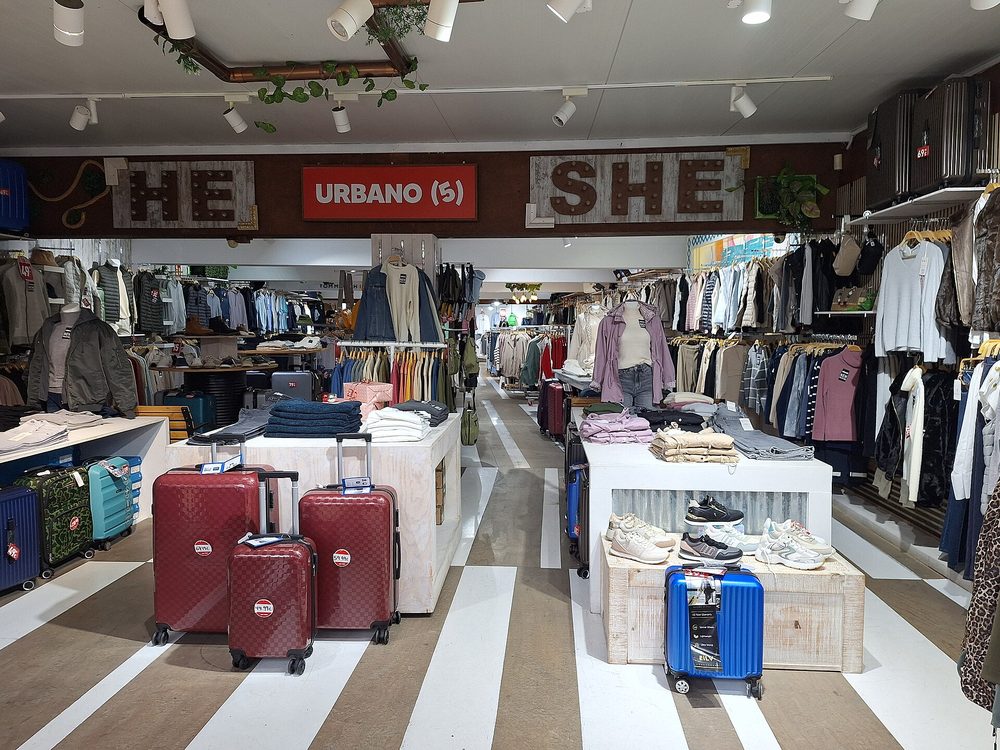
Inside a clothing store: packed rails on both sides, tables of folded clothes and trainers, mannequins and price-tagged suitcases in the foreground, under signs reading “HE”, “URBANO (5)” and “SHE”.
Clothing store in Cala Millor, Majorca. Photo: Steffen Mokosch, CC BY-SA 4.0.

The buyer

The person who decides what’s in your wardrobe isn’t you. Nor the designer.

It’s the store’s buyer. They choose what the store will sell six to nine months in advance.

When you walk into a store, you’re looking at a decision made months earlier, with the season still far away.

Read the whole story

The choice isn’t “I like this coat”. It’s a document: styles, colours, sizes, quantities, wholesale price and delivery dates. All locked in before a single piece exists in the store.

And there’s a ceiling: the buying budget, the open to buy. When it runs out, that’s it — even if the perfect piece turns up later.

If they get it right, they try to restock. It isn’t always possible: it depends on whether the supplier still has fabric and time. If they get it wrong, stock is left over. And unsold stock has only one way out: a discount.

That’s why you sometimes find a sale at an odd time, in the middle of the season. It isn’t the store being generous. It’s a purchase that didn’t go as planned.

That rail isn’t a brand’s taste. It’s one person’s bet, placed months earlier, on a fixed budget.

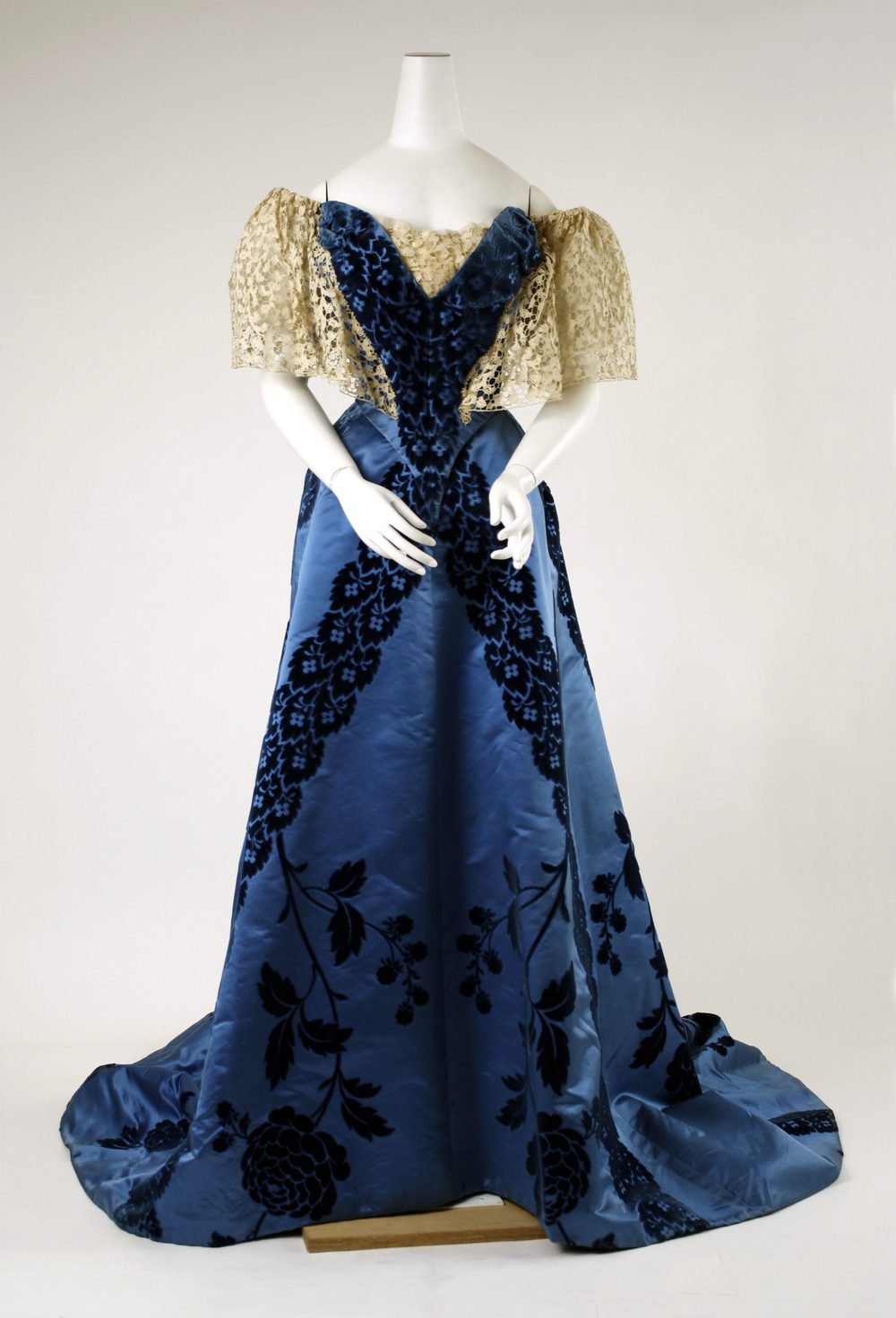
A blue satin evening dress with a train, dark blue floral garlands and short cream lace sleeves, on a white mannequin.
Evening dress, 1898–1900. Photo: The Met, public domain.

Charles Frederick Worth

Before Charles Frederick Worth, the client called the shots on a dress. He turned that around, and fashion still works that way.

He was born in 1825 in Bourne, Lincolnshire. At twenty he moved to Paris and joined Gagelin, a house selling silks and shawls. In 1858 he opened his own, at number 7 rue de la Paix, with the Swede Otto Bobergh.

The client chose the fabric and the dressmaker did as she was told. Worth began designing the models himself, presenting them season by season and letting the client choose among them.

Read the whole story

To show a dress, put a woman in it. Marie Vernet wore the shawls at Gagelin so customers could see them; they married in 1851. Worth turned that into a profession, with models hired by the house. She was the first.

A ball at the Tuileries, 1860: Princess Pauline von Metternich wears Worth. The next day Empress Eugénie wants to meet him. In her memoirs the princess put it plainly: Worth was made, and she was ruined — no more 300-franc dresses.

From the mid-1860s the house stitched a label with its name into the waistband of its dresses. By the late 1880s the label carried his signature, handwritten. Like a painter’s.

A dressmaker became an author. Every name stitched into the clothes you wear comes from that label.

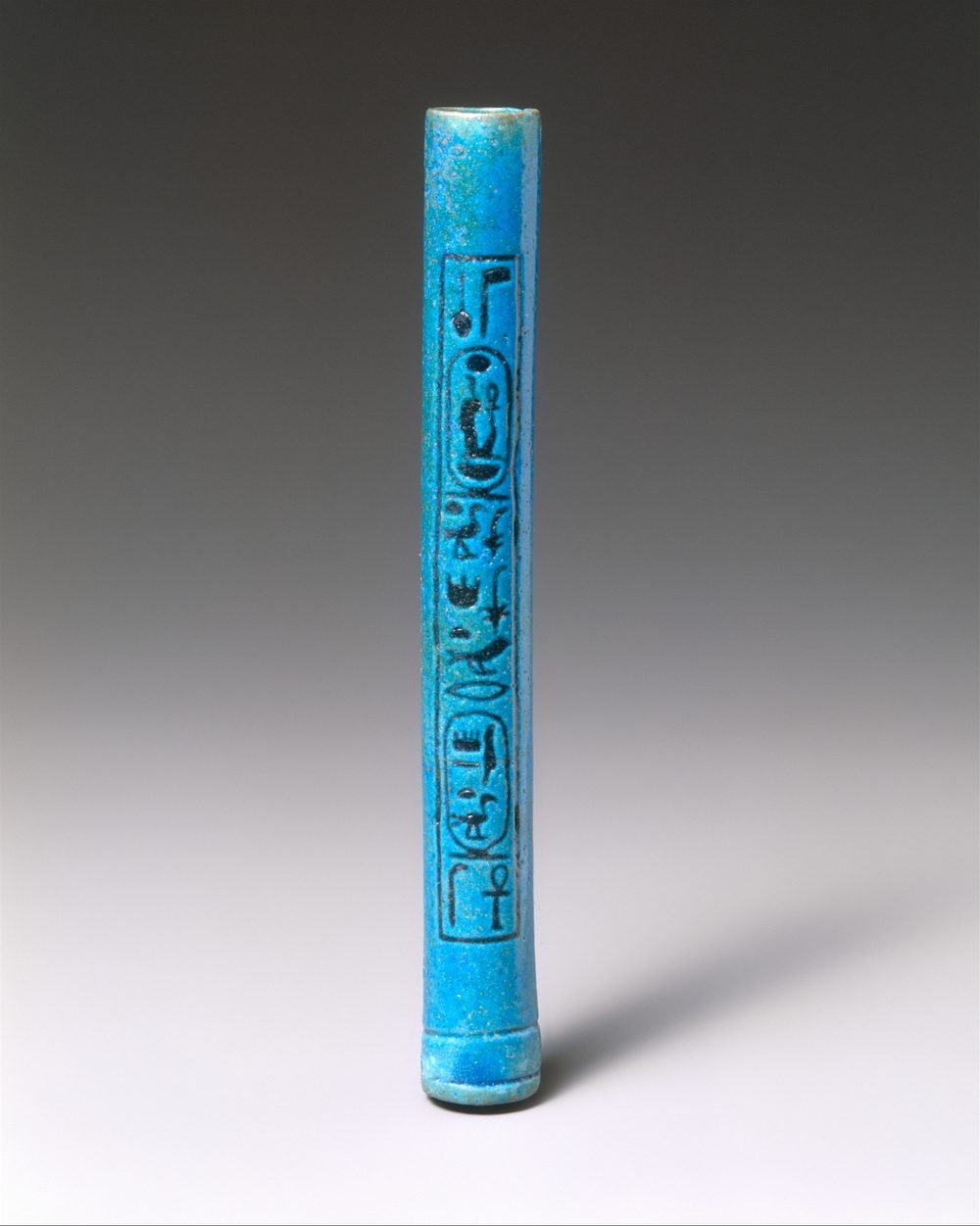
An upright turquoise-blue cylindrical tube with a column of black hieroglyphs, on a grey background.
Kohl tube inscribed for Amenhotep III and Princess Sitamun, ca. 1386–1347 BCE. Photo: The Met, public domain.

Kohl

Egyptian eyeliner was lab chemistry, more than 3,000 years ago.

In ancient Egypt, men and women of every class painted their eyes. Black from galena or green from malachite, ground up and kept in tubes opened with a small stick.

Analysing kohl pots from the Louvre, chemists found laurionite and phosgenite: lead compounds that are extremely rare in nature. They were manufactured from lead oxide, salt and water, filtered and repeated over weeks.

Read the whole story

In 2018, radiocarbon dating of the powder in a Louvre tube bearing the names of Amenhotep III and Queen Tiye confirmed it: the phosgenite was synthetic.

What for? In 2010, researchers from the CNRS and the Louvre found that these compounds, in tiny doses, stimulate the production of nitric oxide in skin cells, one of the body’s defences. Perhaps against infections. Perhaps: it was in a lab, not in people.

And the sun? People keep saying kohl worked as sunglasses. No Egyptian text says so. It’s a reasonable hypothesis, not a fact.

Thousands of years later, the black line hasn’t changed. Only the formula has — and just as well: theirs was made of lead.

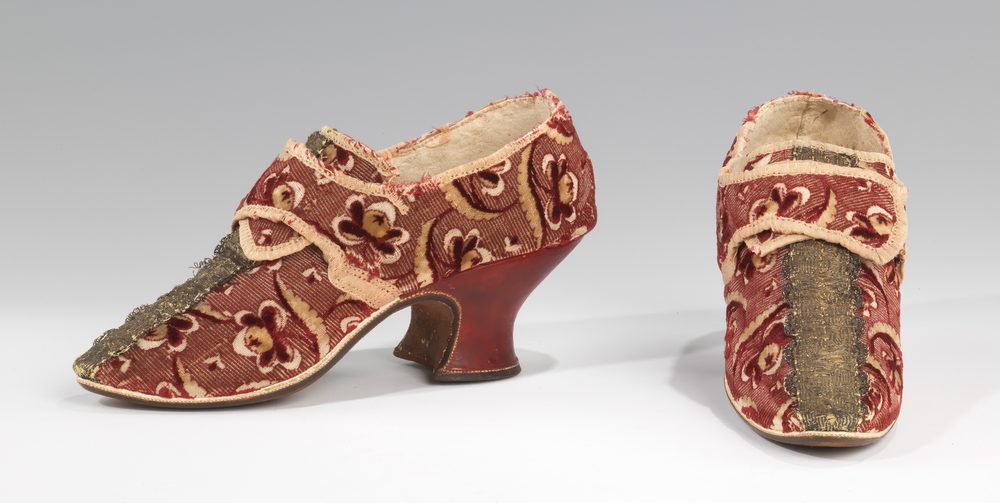
A pair of maroon fabric shoes with cream embroidered flowers, gold braid down the vamp and curved red heels; one seen in profile, the other from the front.
Shoes, 1732–59. The Met, public domain.

Straight shoes

For two centuries, shoes had no left foot and no right.

In the Middle Ages they did. Fourteenth- and fifteenth-century shoes kept at the Museum of London are catalogued as right foot and left foot: medieval shoemakers used mirrored lasts, just like today.

Toward the end of Elizabeth I’s reign, shoes gained heels, and making a mirrored pair with heels was hard work. The fix was an economical one: a single last for both feet. In English, “straights”.

Read the whole story

In 1608 the playwright John Day was already writing about straight shoes, “now of one foot, now of the other”. Whoever wore them shaped the leather by walking.

In 1800 an English regiment ordered its soldiers to swap their boots between feet every other day, so they would wear evenly. It was a military order, not a custom: according to those who study the shoemakers of the period, leather settled to the foot within a few hours.

Around 1800 men’s low shoes had a left and a right again; women’s followed from the 1820s. But many women kept wearing straight pairs until close to 1900.

The shoe with a left and a right is older than the heel. It vanished for two centuries and came back.

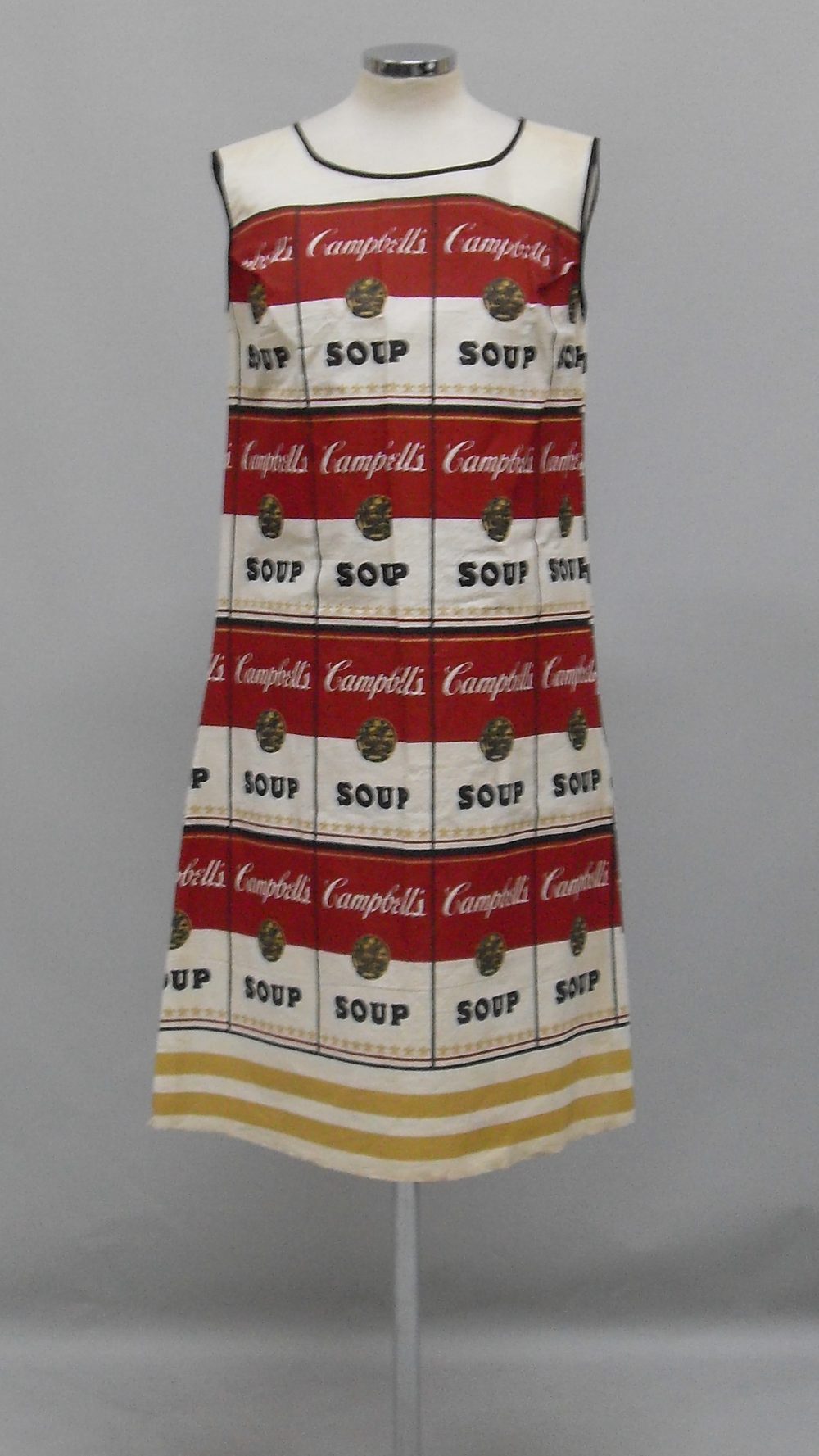
A sleeveless shift dress printed with rows of red-and-white Campbell’s soup cans and two gold stripes at the hem, on a dress form.
Souper Dress. Photo: Peloponnesian Folklore Foundation, CC BY-SA 4.0.

The paper dress

In 1966, a napkin maker became a fashion designer by accident.

Scott Paper was launching a line of coloured paper. To get noticed, it ran the “Paper Caper”: for $1.25 and a proof of purchase, it mailed you a paper dress. Red bandana print or black-and-white op art.

In eight months, half a million dresses, according to Time magazine. Scott ended the promotion by pointing out that it was still a paper company and had no plans to become a fashion designer.

Read the whole story

It wasn’t even just paper: Dura-Weve, 93% cellulose and 7% rayon. It came flame-proofed — until it was washed. The label warned that after water it was dangerously flammable.

It became a craze. Mars, a hosiery maker in Asheville, was selling 80,000 paper dresses a week. A vice-president told Life magazine in 1966 that within five years 75% of the country would be wearing disposable clothes.

And the Souper Dress, the one with the soup cans, isn’t by Warhol. Campbell’s made it itself: one dollar and two soup labels. The Met states in no uncertain terms that it is not his design.

It was over by 1968: they were stiff, they tore, they faded. Wear-once-and-throw-away clothing didn’t catch on. It caught on sixty years later, and not in paper.

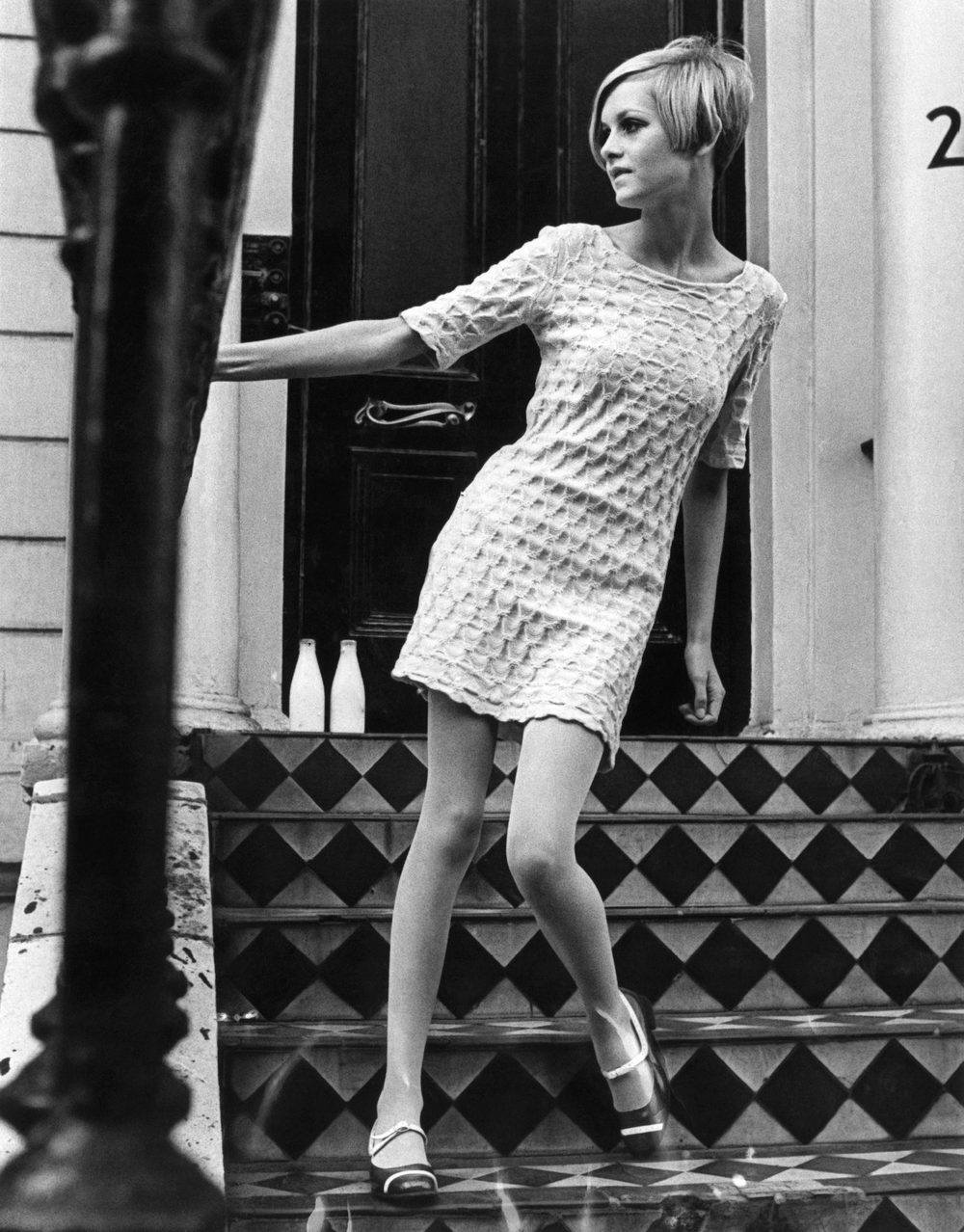
Black-and-white photo of a young woman with short blonde hair and a pale short-sleeved minidress, posing on chequered tiled steps in front of a black door, with two milk bottles by the threshold.
Twiggy in 1967. Photo: KRLA Beat, public domain.

Twiggy

A haircut at 16 and, soon after, the face of the year.

Lesley Hornby was born in 1949 in Neasden, in north London. In 1966 she sat as the model for a short cut at the Leonard of Mayfair salon; upstairs, Daniel Galvin dyed her hair blonde.

Barry Lategan photographed the result, and a portrait ended up hanging in the salon. A Daily Express journalist, one of the salon’s clients, saw it. On 23 February 1966 came the headline: “Twiggy – The Face Of ’66”.

Read the whole story

The nickname came from her thin legs: they called her “Sticks”, and she hated it. It became “Twigs”, then “Twiggy”.

In March 1967 she arrived in New York, aged 17. Newsweek put her on the cover in April, American Vogue several times that year, and Mattel released a doll with her name.

She modelled from 1966 to 1970 and left the profession at twenty. In 1971 she won two Golden Globes for Ken Russell’s The Boy Friend: newcomer of the year and best actress in a comedy or musical. In 2019 she was made a Dame.

Four years were enough to become the face of a decade. Then she chose another life.