OOTDly
The espadrille
A peasant’s shoe for six hundred years, until Yves Saint Laurent asked for one with a heel.
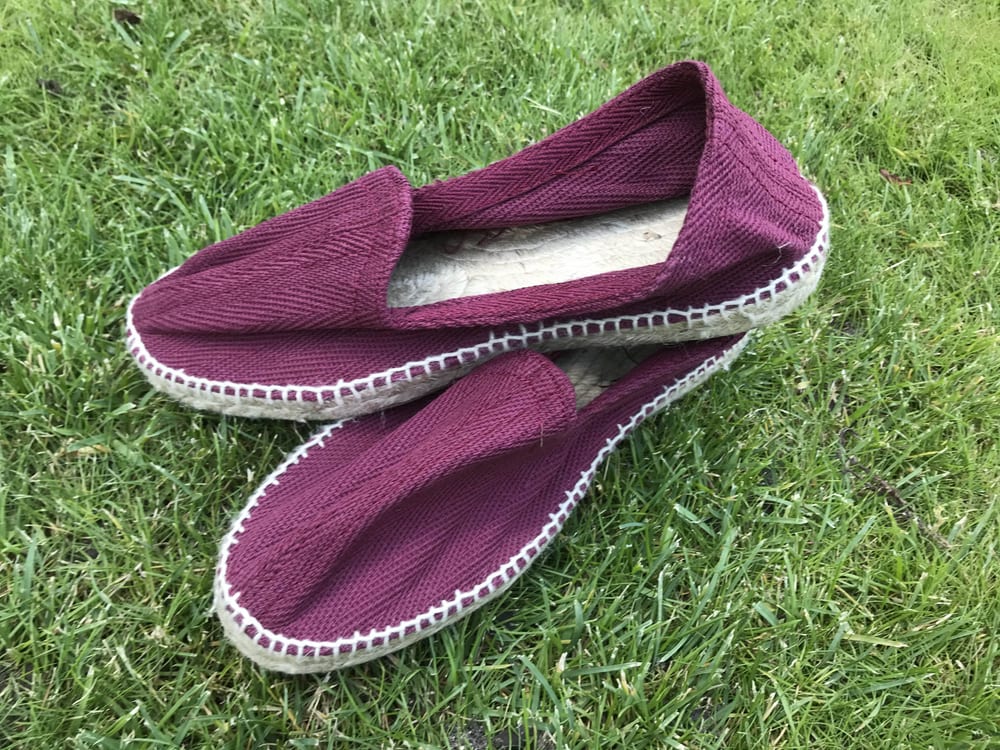
A sole of braided and stitched esparto or jute, with cloth on top. They have been made in the Pyrenees since the 14th century; in Catalan, espardenya. It was what you wore when you couldn’t spend a day’s wage on leather: peasants, fishermen, workers and soldiers.
In 1927 Lluís Castañer and his cousin Tomàs Serra opened a workshop in Banyoles, near Girona. The family had been making espadrilles since 1776; what was new was making them by machine, for the whole country.
The Civil War made them the footwear of soldiers on both sides, and then of the post-war years: cheap, for summer, for the poor. By the sixties hardly anyone wanted them.
In the early seventies, at a trade fair in Paris, Yves Saint Laurent walked up to the Castañer stand with an order: an espadrille with a wedge heel, for the runway. The esparto wedge did not exist; they invented it for him. It went down the runway and from there to half the world.
Since then the espadrille has lived two lives: the market-stall one, at five euros, still the same as in 1927, and the designer wedge, sold in Paris and Tokyo. Both have the same braided sole.
Chanel, Louboutin, Hermès: almost every house now has an espadrille in its summer catalogue. And many are still stitched in the same villages of Girona and La Rioja as a century ago.