OOTDly
The T-shirt
The T-shirt was underwear, and the Navy only let it show on the high seas.
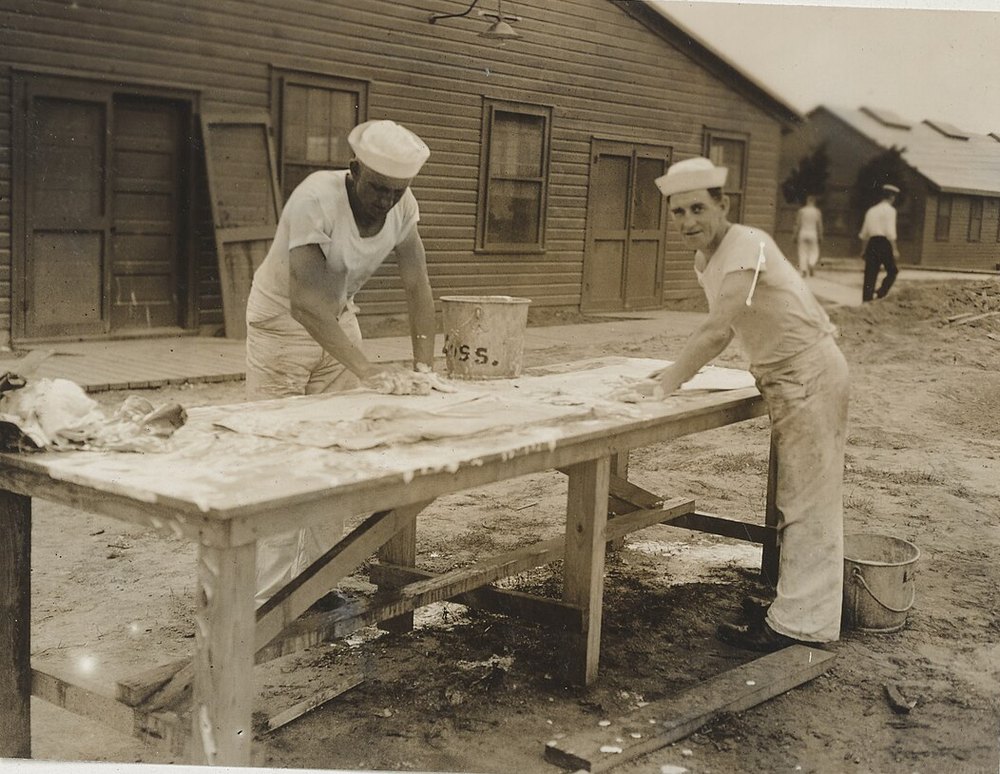
In 1913 the uniform regulations of the United States Navy describe a light undershirt: cotton, with no buttons and with sleeves “only long enough to cover the armpit”. It was meant to be worn underneath.
Sailors could strip down to the undershirt only at sea or in isolated anchorages, when the heat was fierce. It had to be clean, and by supper time the jumper had to go back on.
The word dates from those years. The Oxford English Dictionary first finds it in print in 1912, in the Princeton students’ newspaper. It is usually credited to F. Scott Fitzgerald, who used it in a 1920 novel: he was eight years late.
In 1938 the Sears catalogue was selling a “gob style all purpose shirt”, a sailor-style shirt to wear underneath or on show. And on 13 July 1942 Life magazine put on its cover a serviceman in a T-shirt printed with the name of his gunnery school.
In 1948 the campaign of the Republican Thomas Dewey had its own T-shirt: “Dew-it with Dewey”. One is kept at the Smithsonian. Dewey lost.
What brought it out from under the shirt was the cinema: Marlon Brando in “A Streetcar Named Desire” in 1951, and James Dean in “Rebel Without a Cause” in 1955. Until then, most men still wore it underneath.