OOTDly
The trench coat
The coat named after the trenches was forbidden to the soldiers in the trenches.
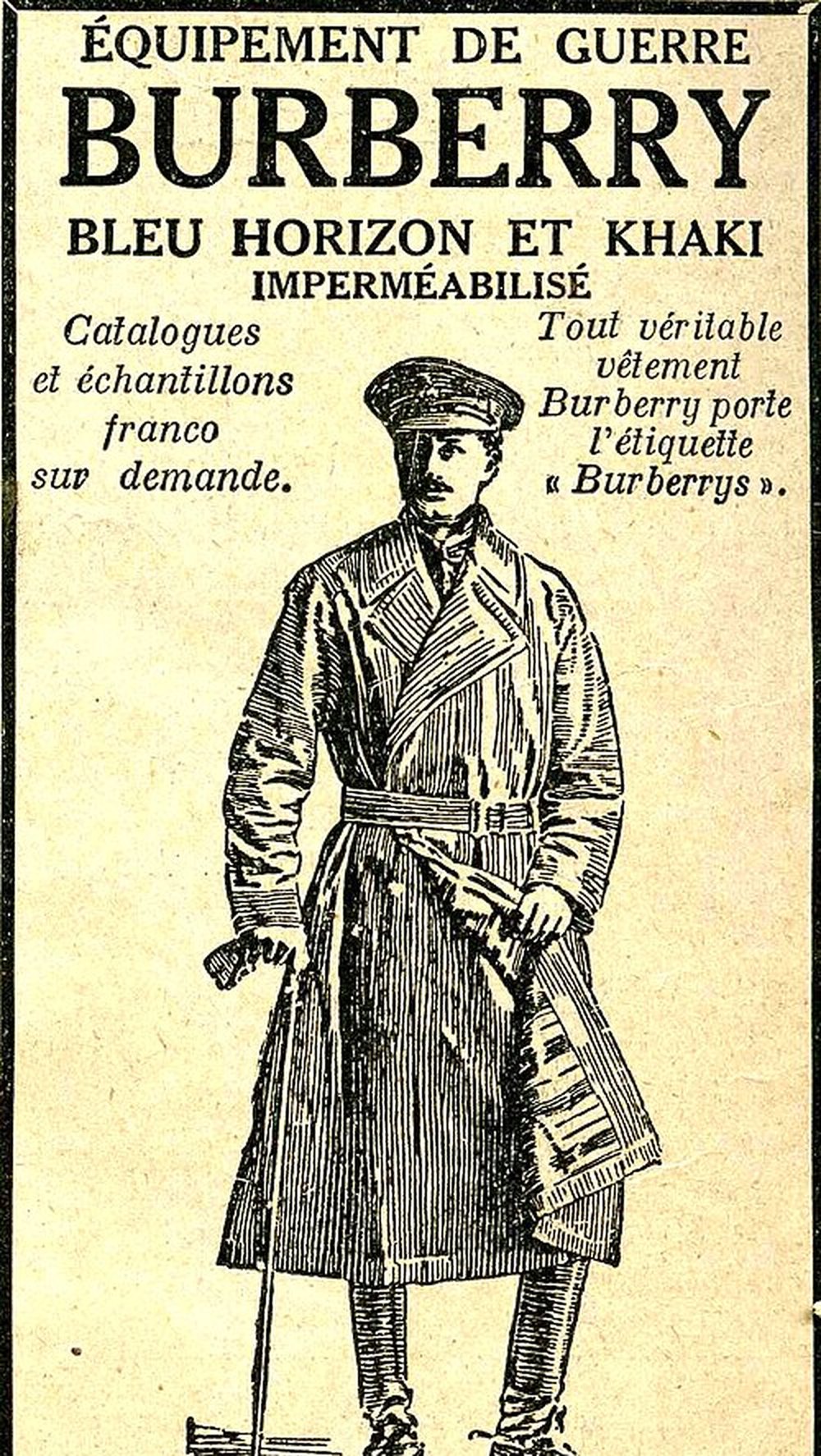
In the First World War the trench coat was not regulation issue. The ranks were given the army’s woollen greatcoat; officers paid for their kit out of their own pockets, and they were the ones who bought it. Private soldiers were not allowed to wear it.
The cloth came first. Thomas Burberry, who had kept a shop in Basingstoke since 1856, developed gabardine in 1879: a very tightly woven twill, waterproofed before weaving, that let the body breathe. The raincoats of the day were made of rubber.
Two houses claim the invention. Aquascutum, opened in London in 1851, whose name means “water shield” in Latin, counts it among its firsts. Burberry patented the Tielocken in 1912, a double-breasted coat fastened with a belt and buckle. No independent source gives the credit to either.
And neither of them coined the word. “Trench coat” first appears in print on 19 December 1914, in an advertisement by Thresher & Glenny, a military tailor almost nobody remembers today.
The shoulder straps were for displaying rank and holding gloves. The D-rings on the belt were for hanging kit. That they were for grenades is often repeated, but it is not documented.
By August 1917 the New York Times was reporting that American officers were asking for the “British trench coat”. The war ended and the officers’ coat stayed on the street.