OOTDly
The pocket
For two centuries, a woman’s pocket was a bag tied around her waist, under her skirt.
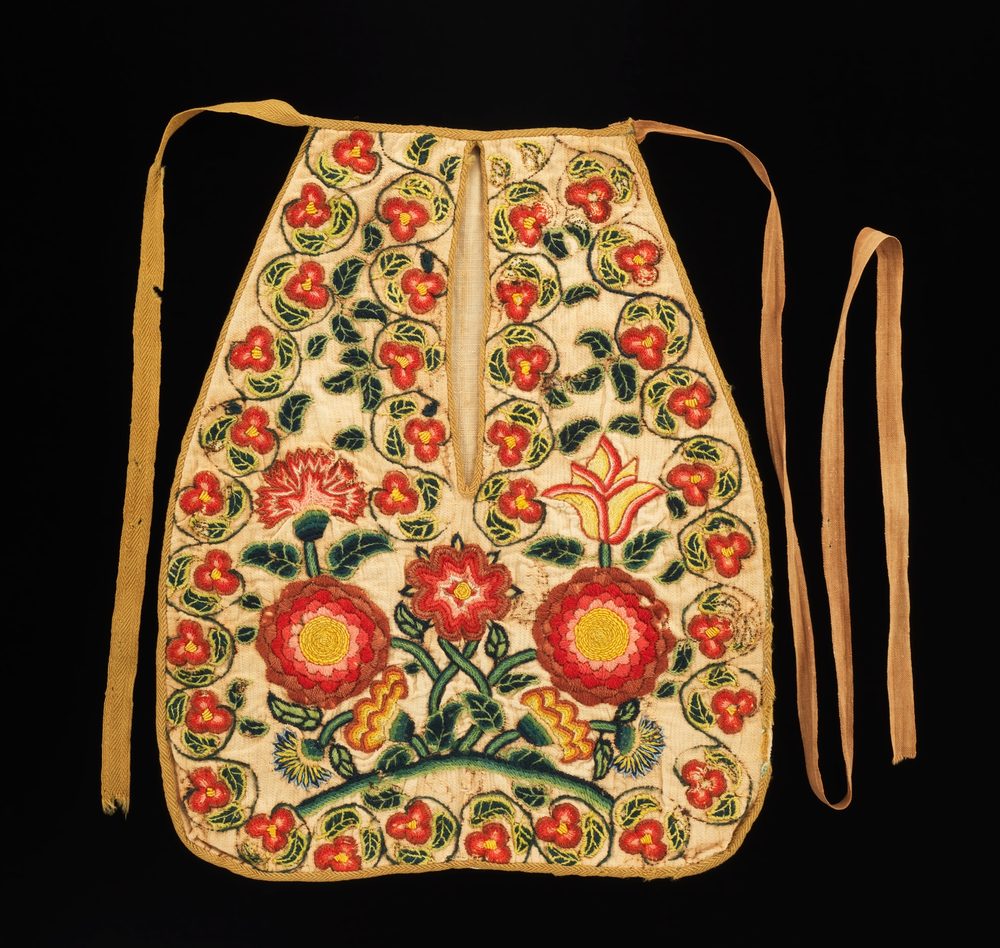
It wasn’t sewn into the clothes. It was a separate piece, tied on with a string, reached through slits in the seams of the skirt and petticoat. You wore one, two or three at a time.
And they were big: most surviving ones measure about 40 by 30 cm. The largest on record is 61.5 by 43.5 cm — bigger than the biggest Birkin.
Inside: keys, coins, jewelry, a watch, a thimble, a letter, a miniature portrait. Working women carried the tools of their trade.
That mattered. Under English law, a married woman couldn’t own property of her own until the property acts of the 1880s. The bag tied at her waist was the safe she had.
Two historians found 572 Old Bailey court cases for theft of these pockets.
Around 1800 dresses slimmed down, fabric got lighter and the bag no longer fit underneath. Enter the handbag: the “reticule”, from the Latin reticulum, little net.
But one didn’t replace the other — that story is too neat. The two lived side by side for almost a century; the tied pocket just changed its trade name, becoming the “money apron” or the “travelling pocket”.
What never came back was the sewn-in pocket. In 2018, 80 pairs of jeans from 20 brands were measured: an average depth of 14.3 cm in women’s against 23.1 in men’s.
Only 40% of women’s front pockets fit a phone from the three leading brands. And the average price is the same: $80 against $81.