OOTDly
Elsa Schiaparelli
Coco Chanel refused to say her name. She called her “that Italian who makes clothes”.
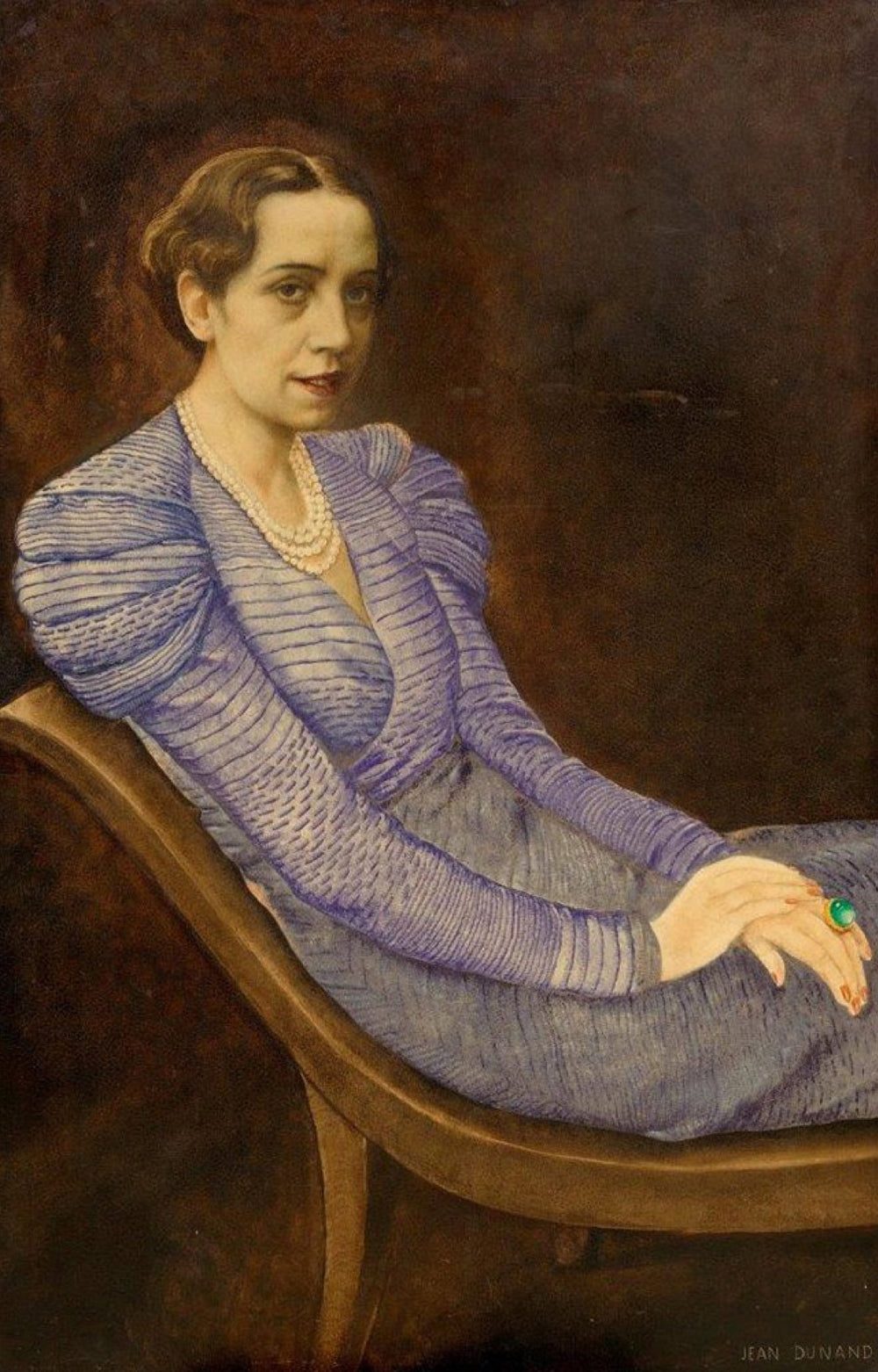
Elsa Schiaparelli hit back with a single word: “that milliner”. The rivalry that split 1930s fashion.
Born in Rome in 1890, she arrived in Paris in 1922 with no money and no idea how to cut a pattern.
In 1927 she knitted a black sweater with a white bow worked into the knit itself: a trompe-l’œil, not a sewn-on bow. Vogue published it. A New York store ordered forty. The house was born from that.
In 1931 Lili de Álvarez walked onto Wimbledon in one of her divided skirts, and the press treated it as a scandal. She was also one of the first to put a visible zip on a couture garment, when zips were for boots.
She brought Dalí, Cocteau and Man Ray into the clothes: the 1937 lobster dress that Wallis Simpson wore, the hat shaped like a shoe.
She saw Daisy Fellowes’s 17-carat pink diamond and took a colour from it. She called it Shocking and gave the perfume the same name, in 1937, in a torso-shaped bottle. The pink is still the house’s signature.
Two women, two opposite ideas of fashion: Chanel stood for elegance and comfort; Schiaparelli, for clothes as art and as provocation. The story goes that at a ball Chanel asked her to dance and steered her into a lit candelabra; the dress caught fire and was put out with soda water. The teller is Bettina Ballard, a Vogue editor.
She closed the house in 1954 and died in 1973 without seeing it reopen. Today Schiaparelli dresses the entire red carpet.