OOTDly
Madeleine Vionnet
She didn’t invent the bias cut. She did something harder: she built the whole dress with it.
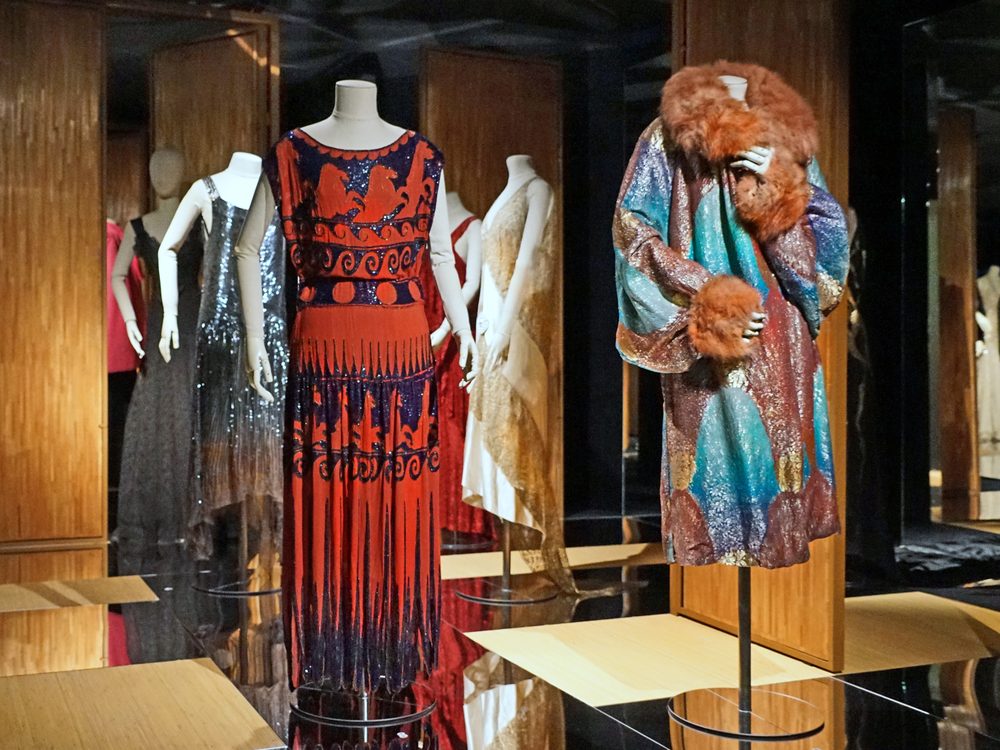
Cutting fabric on the diagonal already existed, but it was used for details: collars, ruffles, bias binding. Madeleine Vionnet was the first to rethink the entire garment from that technique.
Cut this way, the fabric stretches and springs back, follows the body and falls on its own. It needs no corset underneath to hold the shape: the shape is in the cut.
And she didn’t sketch first. She draped straight onto an articulated wooden mannequin 80 cm tall, at reduced scale, and only then reproduced it at full size. She thought of clothes in three dimensions, like soft sculpture.
Her house, opened in 1912, offered paid holidays, maternity leave, a crèche, a doctor and a dentist on site. French law only made paid holidays compulsory in 1936.
Against copies, she set up a system: every model photographed from three sides and filed in registration albums, and her own fingerprint applied to the label sewn into every garment.
It didn’t work. A Paris museum holds an unauthorised copy of the “Little Horses” dress, from 1924. She spent her life in lawsuits.
And that story about her being inspired by watching Isadora Duncan dance barefoot? It has no source. What is documented is the opposite: in 1923 Isadora Duncan was her client.