OOTDly
The peplum
The peplum never cinched anything.
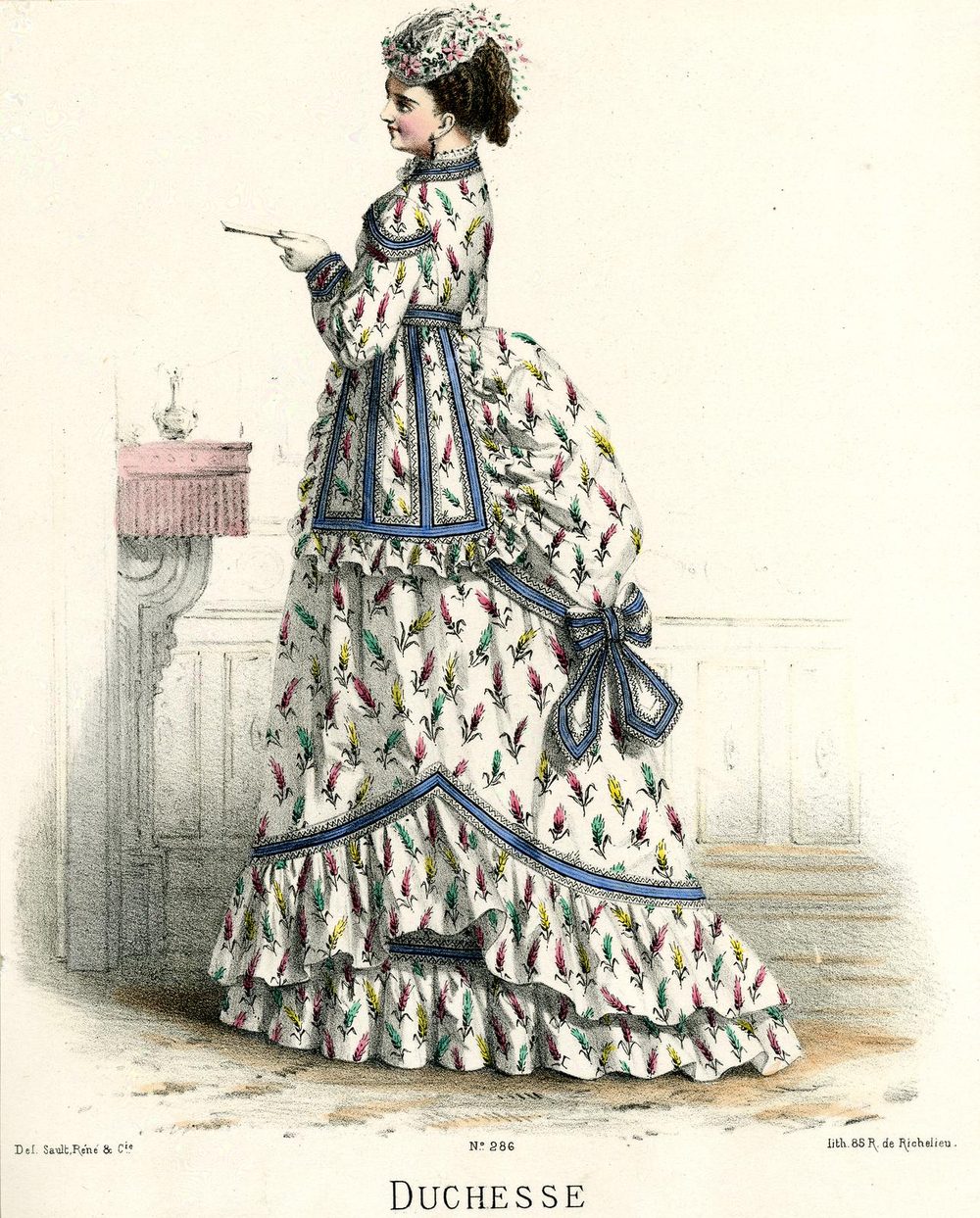
The flare that springs from the waist comes back every season. And the trick was never in the waist.
It comes from the Greek peplos: a length of cloth fastened at the shoulders, with so much left over that it had to be gathered up. That gathered fold is the whole invention.
Magazines were already living off this. Where the waist falls and what the fabric does as it leaves it: that is what the Paris fashion plates were talking about two centuries ago.
And it had a name of its own. In the 19th century it was called a basque: the panel that springs from the waist and falls over the skirt. It’s what you’re looking at in this plate.
In 1947 Dior fooled the eye. The Bar jacket hid padding and horsehair at the hips underneath: the waist looked narrower because the hips were wider.
In the eighties it came back with shoulder pads, and that is where its reputation for excess comes from: the same piece that was a break with the past in 1947 sounded like too much forty years later.
Around 2011 it came back to the runways, and within two years it was everywhere, from the runway to the high-street shops. It’s the route followed by almost everything you end up buying without knowing where it came from.