OOTDly
Havaianas
The most famous flip-flop in the world is a copy, and it was made for people who couldn’t afford shoes.
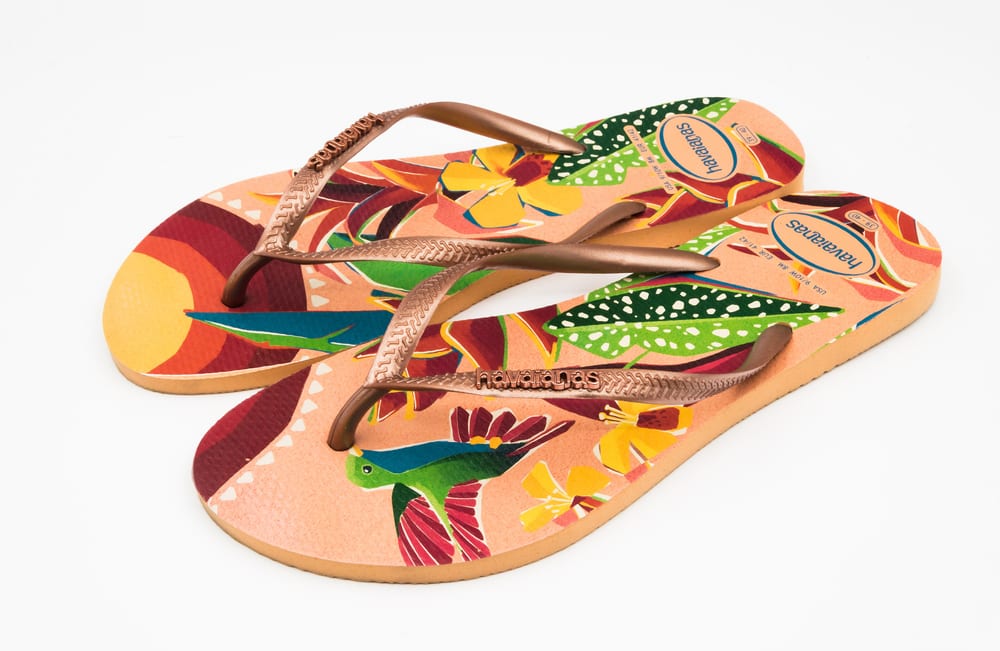
In 1962 the São Paulo Alpargatas factory copied the zori, the Japanese rice-straw sandal, and made it entirely of rubber. The sole still carries the rice-grain pattern of the straw mat.
The name came from Hawaii, which in the sixties meant the beach of the movies. The price did not: it was the footwear of the builder and the housemaid, sold at the market next to the groceries.
Copies arrived at once, and in the ads of the seventies and eighties the comedian Chico Anysio repeated what set them apart: they don’t lose their shape, they don’t smell and the straps don’t come off. “Havaianas, as legítimas”: the real ones.
They were so basic that in the eighties the Brazilian government put them on the list of price-controlled goods. And that nearly killed them: by the nineties a cheap flip-flop for the poor was something nobody wanted to be seen in.
1994: sales falling, Alpargatas launches Havaianas Top, single-colour and pricier, and puts them on the feet of actors and models. In 1998, for the World Cup in France, a strap with the Brazilian flag. The worker’s flip-flop became Brazil on your feet.
By 2000 they had stores in luxury malls in the United States and Europe. Same rubber, same rice grain on the sole: what changed was who wanted to be seen wearing them.