OOTDly
Kohl
Egyptian eyeliner was lab chemistry, more than 3,000 years ago.
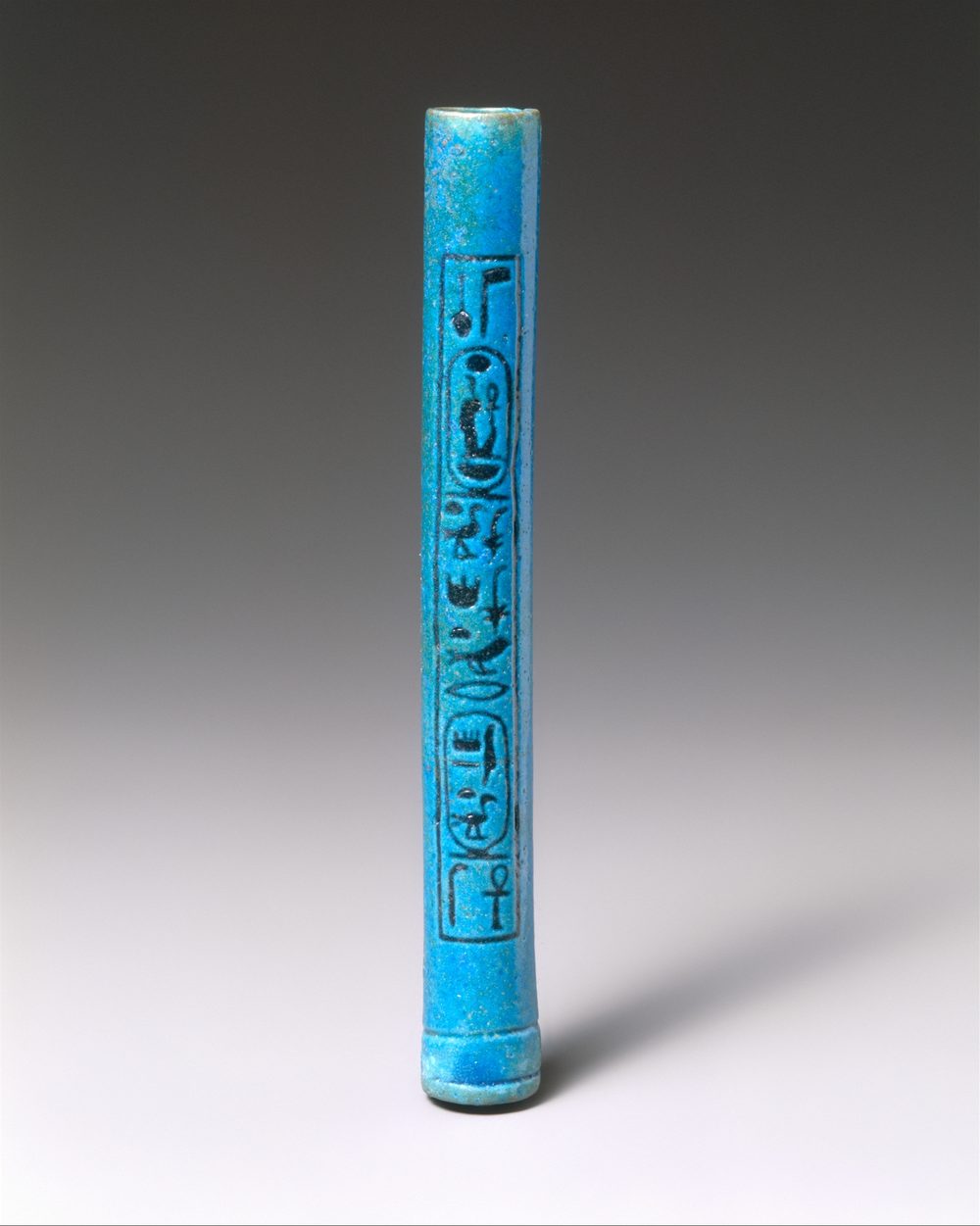
In ancient Egypt, men and women of every class painted their eyes. Black from galena or green from malachite, ground up and kept in tubes opened with a small stick.
Analysing kohl pots from the Louvre, chemists found laurionite and phosgenite: lead compounds that are extremely rare in nature. They were manufactured from lead oxide, salt and water, filtered and repeated over weeks.
In 2018, radiocarbon dating of the powder in a Louvre tube bearing the names of Amenhotep III and Queen Tiye confirmed it: the phosgenite was synthetic.
What for? In 2010, researchers from the CNRS and the Louvre found that these compounds, in tiny doses, stimulate the production of nitric oxide in skin cells, one of the body’s defences. Perhaps against infections. Perhaps: it was in a lab, not in people.
And the sun? People keep saying kohl worked as sunglasses. No Egyptian text says so. It’s a reasonable hypothesis, not a fact.
Thousands of years later, the black line hasn’t changed. Only the formula has — and just as well: theirs was made of lead.