OOTDly
Straight shoes
For two centuries, shoes had no left foot and no right.
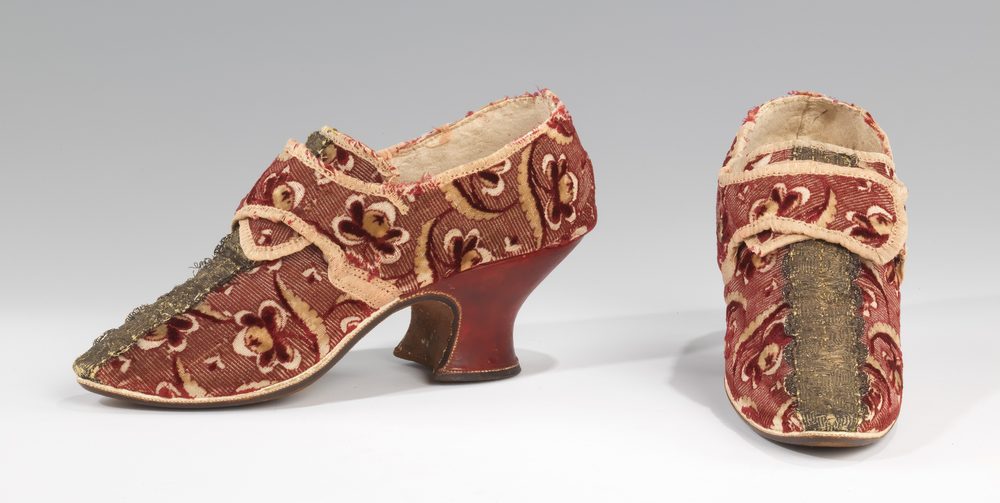
In the Middle Ages they did. Fourteenth- and fifteenth-century shoes kept at the Museum of London are catalogued as right foot and left foot: medieval shoemakers used mirrored lasts, just like today.
Toward the end of Elizabeth I’s reign, shoes gained heels, and making a mirrored pair with heels was hard work. The fix was an economical one: a single last for both feet. In English, “straights”.
In 1608 the playwright John Day was already writing about straight shoes, “now of one foot, now of the other”. Whoever wore them shaped the leather by walking.
In 1800 an English regiment ordered its soldiers to swap their boots between feet every other day, so they would wear evenly. It was a military order, not a custom: according to those who study the shoemakers of the period, leather settled to the foot within a few hours.
Around 1800 men’s low shoes had a left and a right again; women’s followed from the 1820s. But many women kept wearing straight pairs until close to 1900.
The shoe with a left and a right is older than the heel. It vanished for two centuries and came back.