OOTDly
The Delphos gown
The patent was in Fortuny’s name, and he wrote by hand that she was the inventor.
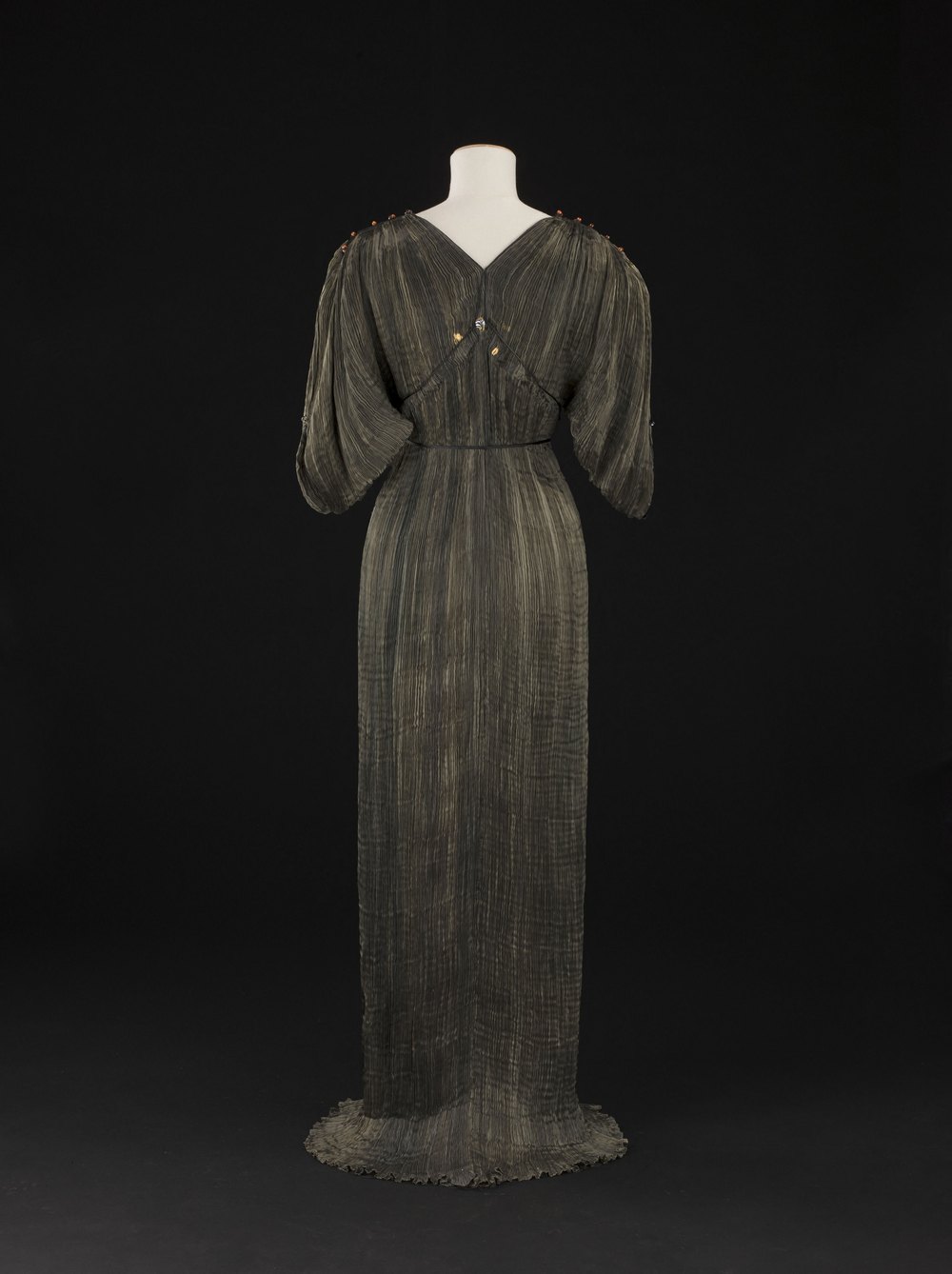
Mariano Fortuny was born in Granada in 1871 and ended up in Venice. Between 1907 and 1909 his workshop produced a gown of silk pleated so finely that it fell like a Greek column. They called it the Delphos, after the Charioteer of Delphi.
The pleating was patented in Paris in 1909, in his name. But on a copy of the patent Fortuny left a note in his own hand: it belonged to Henriette, his partner, “who is the inventor”. He had registered it in his name because of the urgency.
A century later, the Victoria and Albert Museum in London changed its records: Henriette Negrin was largely, if not wholly, responsible for the gown.
It is made of several narrow panels sewn by hand into a tube. It carries Venetian glass beads threaded on a silk cord: they decorate it and give it weight.
It was not hung up. It was rolled lengthwise, twisted into a ball and kept in a small box, so that it would not lose its pleats. Several museums hold the gown with its original box.
Sarah Bernhardt and Isadora Duncan were among the first to wear it, and Proust dressed the Albertine of his novel in Fortuny. One secret remains: exactly how the pleats were made was never documented.