OOTDly
The Manila shawl
Spain’s most Spanish shawl is not from Manila, and in China, where it was embroidered, nobody wore it.
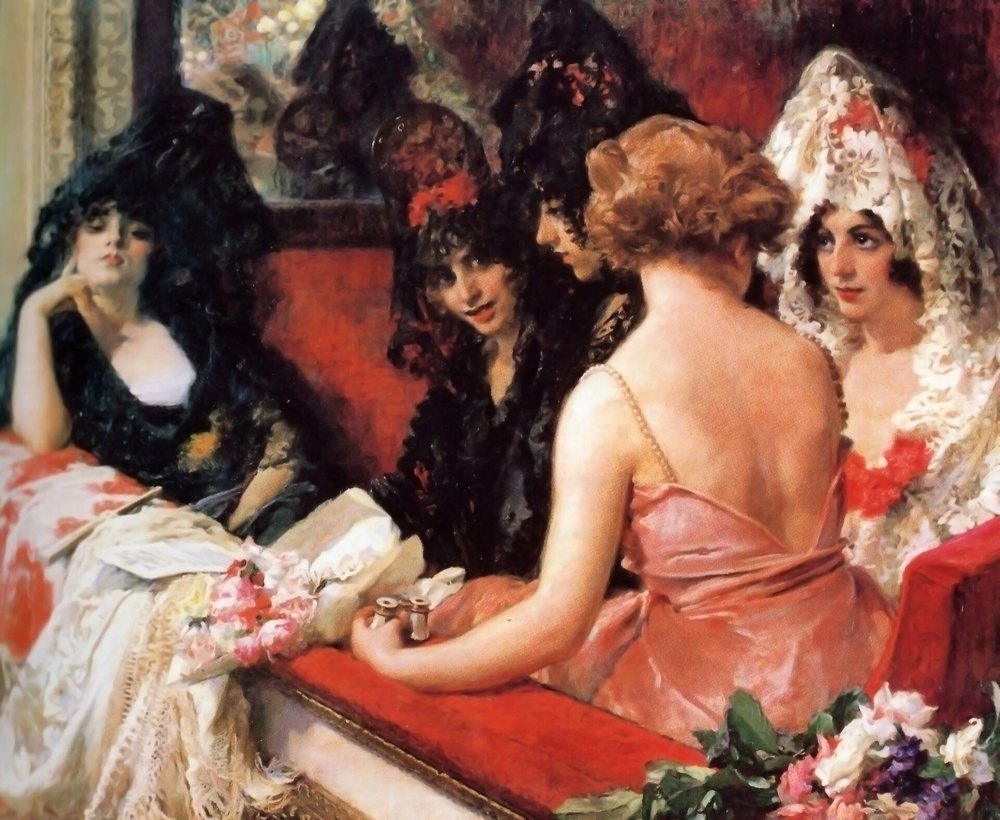
It was embroidered in southern China, in the workshops of Canton and Macao. Manila gave it its name because that was the port where the goods changed ships. And the square shawl does not exist in traditional Chinese dress: it was made only to be sold abroad.
The name comes from the route. The Manila Galleon linked the Philippines with Acapulco from 1565 to 1815; from there the cargo crossed Mexico overland to Veracruz and went on to Spain. But the dated shawls kept in museums are from the nineteenth century, and the Victoria and Albert Museum in London places their boom from 1821 onwards, when the galleon was already gone.
The designs changed with the customer. The first carried Chinese scenes: figures, pagodas, dragons and birds. Later the large flowers of Western taste won out: roses, carnations and lilies.
And they were huge. One in the National Museum of Decorative Arts in Madrid measures 194 by 202 centimetres, with a 42-centimetre fringe. In Britain they were also used to cover pianos and tables.
Galdós gave it a passage in “Fortunata y Jacinta”, in 1887: he attributes the embroidery to a Chinese artist, Ayún, and says it was worn by grand ladies and Gitanas alike.
In 1894 “La verbena de la Paloma” opened in Madrid, with its habanera: “¿Dónde vas con mantón de Manila?”, where are you going in a Manila shawl? By then it had passed from high society to popular festivals, and there it stayed.