OOTDly
The Bonfim ribbon
The three-wish bracelet did not begin as a bracelet: it was as long as the arm of a Christ and was worn round the neck.
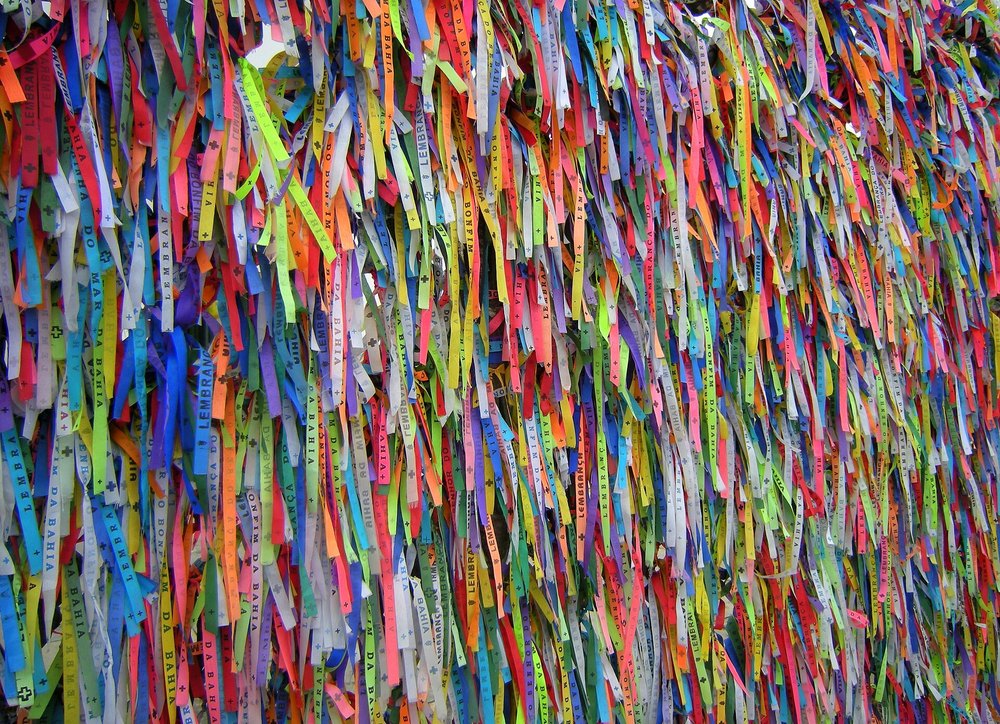
In Salvador da Bahia they called it a “medida”, a measure, because it measured 47 centimetres: the length of the right arm of the statue of Senhor do Bonfim. It was a wide, embroidered, expensive ribbon, worn round the neck, over the shoulders or on the hat.
The official version says it was created in 1809 by Manoel Antônio da Silva Serva, treasurer of the brotherhood, and sold to pay for the church. But one of the brotherhood’s own books already records the measures in 1792. What Serva did, the man who set up Bahia’s first printing press in 1811, was make them and sell them.
Nor was it a Bahian idea. According to the researcher Nelson Cadena, “saints’ measures” came from Portugal, and Bahia had them for other saints too.
That ribbon disappeared in the twentieth century, and nobody can say when it moved from the neck to the wrist. A 1959 photograph by Pierre Verger already shows a seller of Bonfim ribbons.
Today’s is something else: polyester, a centimetre wide, factory-made and mostly outside Bahia. Brazil’s heritage institute says it plainly: the traditional measure was lost to industrialisation.
And the three knots, one wish per knot, until it falls off by itself? That is how it is worn today, but no old document records it. Nor that each colour belongs to an orixá: according to the rector of the basilica, the original measure was white.